The backlog never ends
Each specialist scores a few hundred conversations a month by hand. The queue grows faster than the team; calibration sessions eat the time that coaching needed.
Ender is the QA specialist who listens to 100% of your calls, chats and emails, scores each one on your scorecard, categorizes it, summarizes it, flags the ones a human should see, and on Monday morning hands every agent a coaching note from their own conversations. Its accuracy against your reviewers is on the screen — typically 95%+ — and it improves from their reviews. Your specialists calibrate and coach; Ender does the listening.
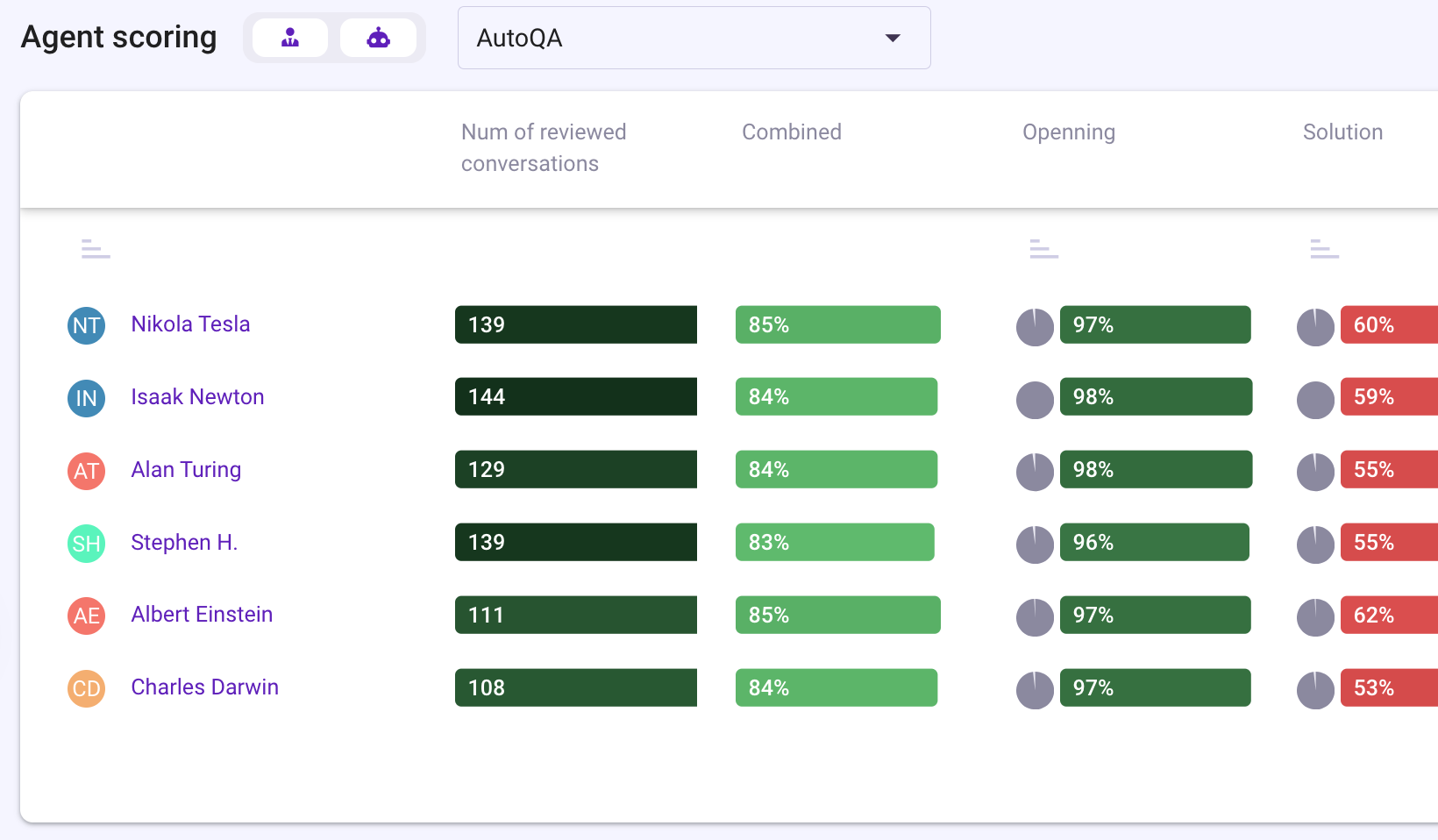
Each specialist scores a few hundred conversations a month by hand. The queue grows faster than the team; calibration sessions eat the time that coaching needed.
Three calls per agent per month is not a picture of the agent — it is a lottery. The critical miss is statistically absent.
By the time the monthly quality report is read, the customer is gone and the agent has repeated the mistake a hundred times.
Standard templates for your case are installed on sign-up; everything here works on the free plan.
Calls, chats and emails, on the rubric your reviewers already use — imported from Excel or taken from the templates library — with partial and critical points. No sampling, no backlog: the score exists as the conversation ends.
For the whole scorecard and for every point, Ender shows how often it agreed with human-validated reviews — typically 95%+ — and the accuracy-improvement workflow raises it from those reviews without changing the wording your team reads. Reviewers calibrate; nobody writes prompts.
Every conversation gets its topic — the reason, the stage reached — learned by generative AI from your samples with its accuracy checked, and an automatic summary of what the customer wanted and what the agent did.
Enders route the exceptions: a failed critical point notifies the team lead, a low score lands in a reviewer's queue, a compliance miss is tagged — in-app and by email. Your specialists open To Do and find the conversations that need them, not the ones that do not.
A scheduled chat of the "for agent" type asks EnderGPT your question every week and produces a separate report per agent from that agent's own conversations — what went well, what to change, with the calls. Define it once.
Chat with EnderGPT answers "which points fail most on the collections team?" with the calls cited; dashboards and C-level boards carry the numbers; email reports deliver them on a schedule. Roles decide who sees which team.
Averages across our contact-center deployments — each customer's own numbers are in the case studies. Case studies →
Product screenshots — dashboards and analyses from the platform, not illustrations.
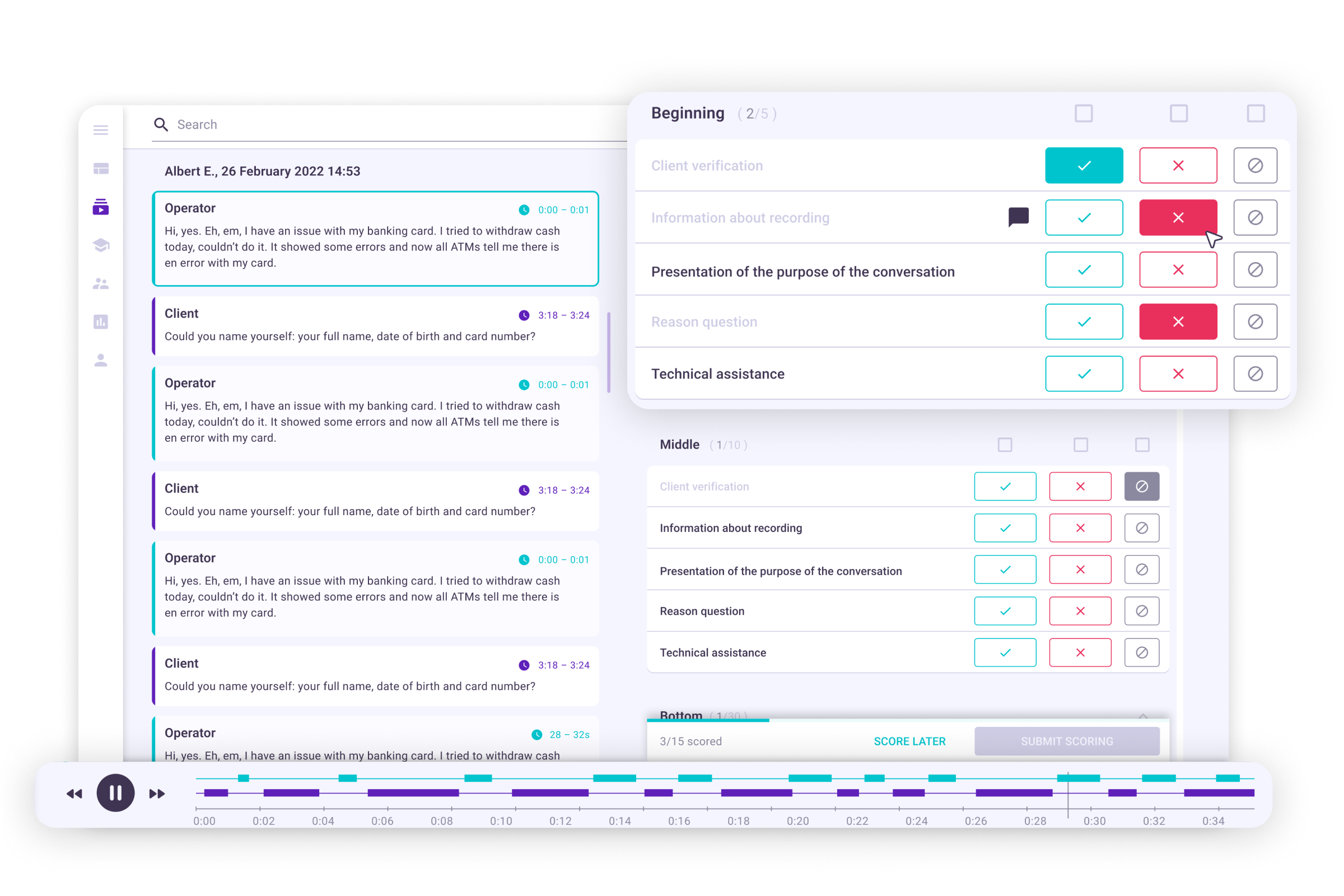
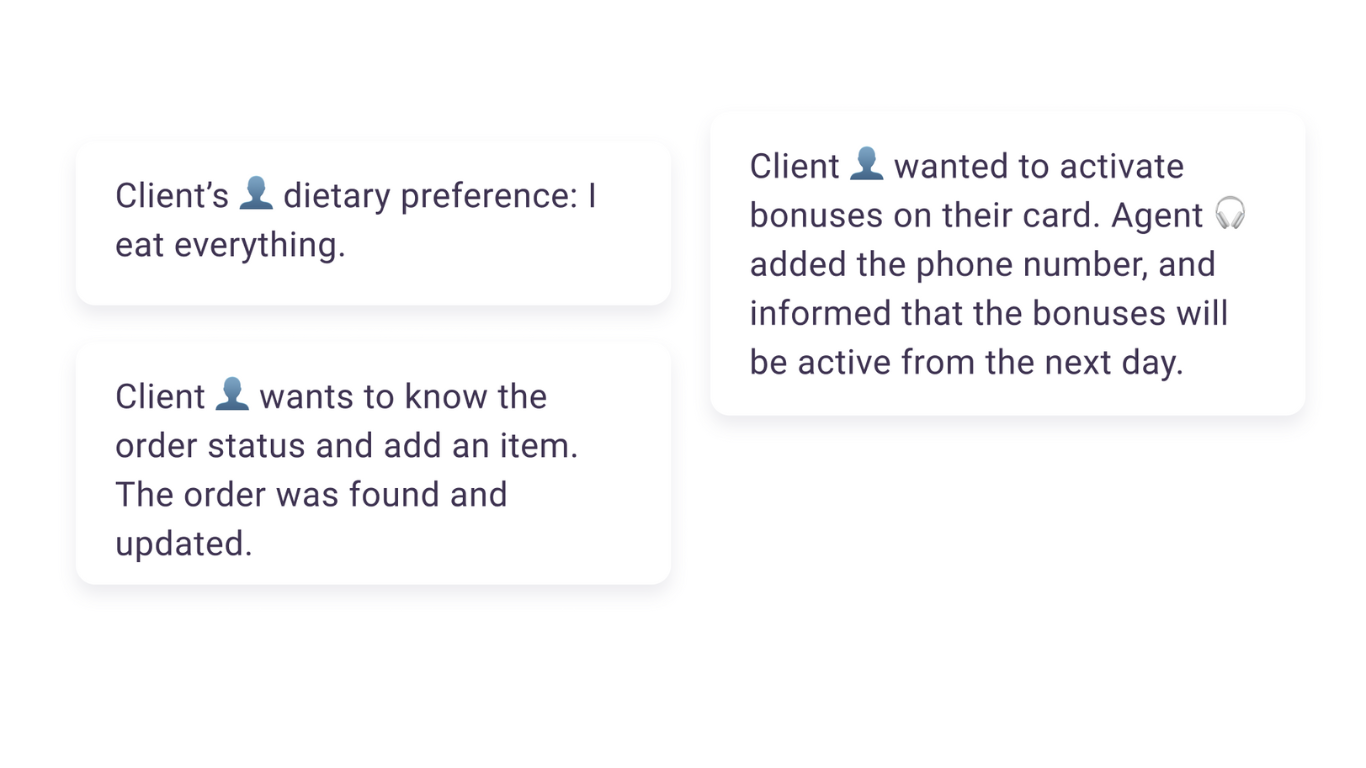
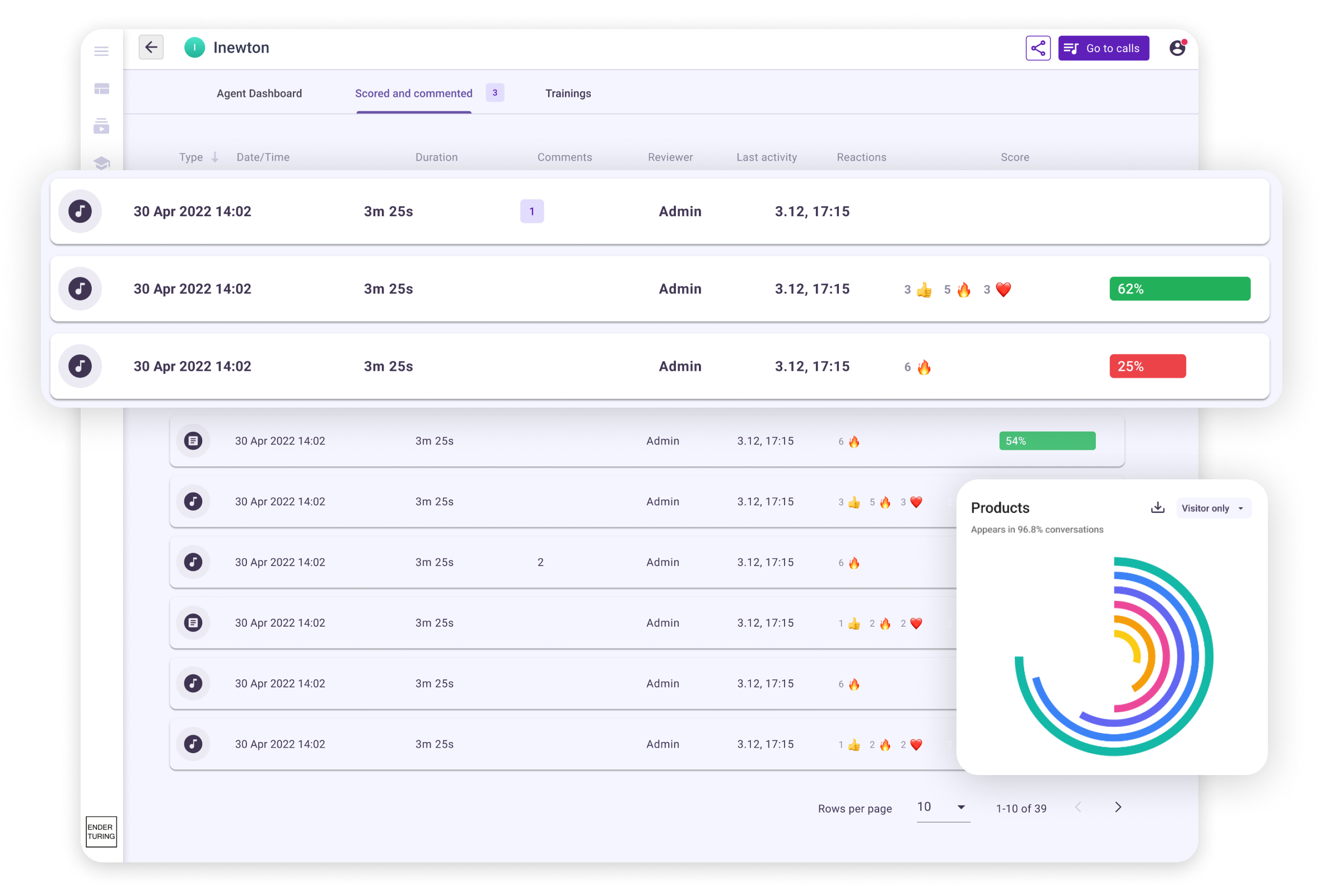
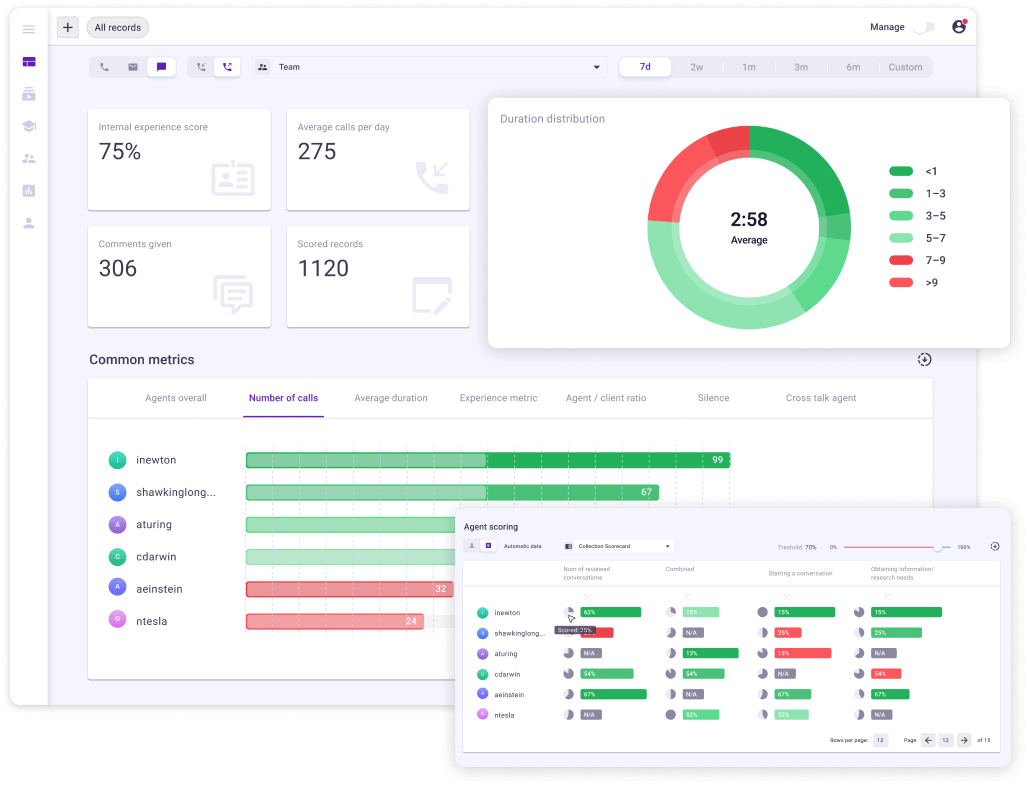
How scorecards, accuracy measurement, compliance rules and review queues work in detail.
Playlists, training plans, quizzes and each agent's own dashboard — where Ender's findings become next week's behavior.
Ender Assist, a separate product, puts the right script or reminder on the agent's screen while the customer is still talking.
A way of describing what AI quality assurance does when it is set up as a colleague rather than a tool: it listens to every conversation, scores it on the team's own scorecard, categorizes and summarizes it, escalates the exceptions, and prepares the coaching material — the work a QA specialist does, on 100% of conversations instead of a sample. In Ender Turing that colleague is Ender: AutoQA, topics, summaries, Enders and scheduled EnderGPT reports working together.
Typically 95%+ agreement with your own reviewers on automated scorecards, shown per scorecard and per point on the screen, based on human-validated reviews — and improved from those reviews by the accuracy-improvement workflow. You never have to take the number on trust; it is measured on your calls, against your people.
It replaces the listening, not the judgment. Across 50+ contact-center deployments, teams save 68 QA hours per specialist per month and cover 100% of calls instead of 3–5%. The specialists keep the calibration, the disputes and the coaching — the part that needed a person all along.
Through the same places your team already works: Ender's scores and comments appear on each conversation; exceptions land in the To Do review queue and in notifications; agents see Ender's scores on their own dashboard and can dispute a point, which the reviewer approves, voids or partially approves; weekly coaching notes arrive as scheduled chats. Roles decide who sees what.
Your scorecard — imported from Excel or chosen from the templates — and your conversations: through a documented app or connector, the browser extension, the REST API, SFTP or upload. A few review sessions calibrate it; the accuracy is visible while that happens.
Software, on a subscription: the free plan covers up to 5 agents with no expiry, Team is $39 per agent per month, Business adds executive boards, scheduled reports, connectors and implementation engineers who set it up with you. There is no consulting fee and no headcount — that is the point.
Any language.
Ender Turing has completed a SOC 2 Type II examination and handles data in a GDPR-compliant way on every plan; Enterprise adds private cloud or on-premise deployment. Anonymization redacts configured sensitive words in transcripts and masks the matching audio; Roles decide who can open which team's conversations.
Security, hosting regions, sub-processors and response times are documented on the Data Security page; SOC 2 Type II examination completed.
Sign up, import your scorecard, connect a platform or upload recordings — the first conversations come back scored, categorized and summarized the same day.