Demand you cannot see
Patients ask for tests, doctors and time slots every day. The ones you could not book disappear from every report — except the call recording nobody has time to open.
Labs, clinic networks and insurers run their patient lines on Ender Turing because a scheduling call is where demand, satisfaction and revenue meet — and only a sample of them was ever heard. Every call, chat and email is transcribed, categorized and scored the moment it ends; personal data is masked; the summary lands in your CRM or appointment system. In any language.
Patients ask for tests, doctors and time slots every day. The ones you could not book disappear from every report — except the call recording nobody has time to open.
A few patients rate a visit. Thousands of calls carry the real tone — the wait, the pricing confusion, the callback that never came — and no one hears them.
Recordings hold names, diagnoses and results. Sampling them by hand is slow and risky; masking them by hand does not happen at all.
Contact-center templates are installed on sign-up; personal-data masking, executive boards and engineer-set connectors come with the Business plan.
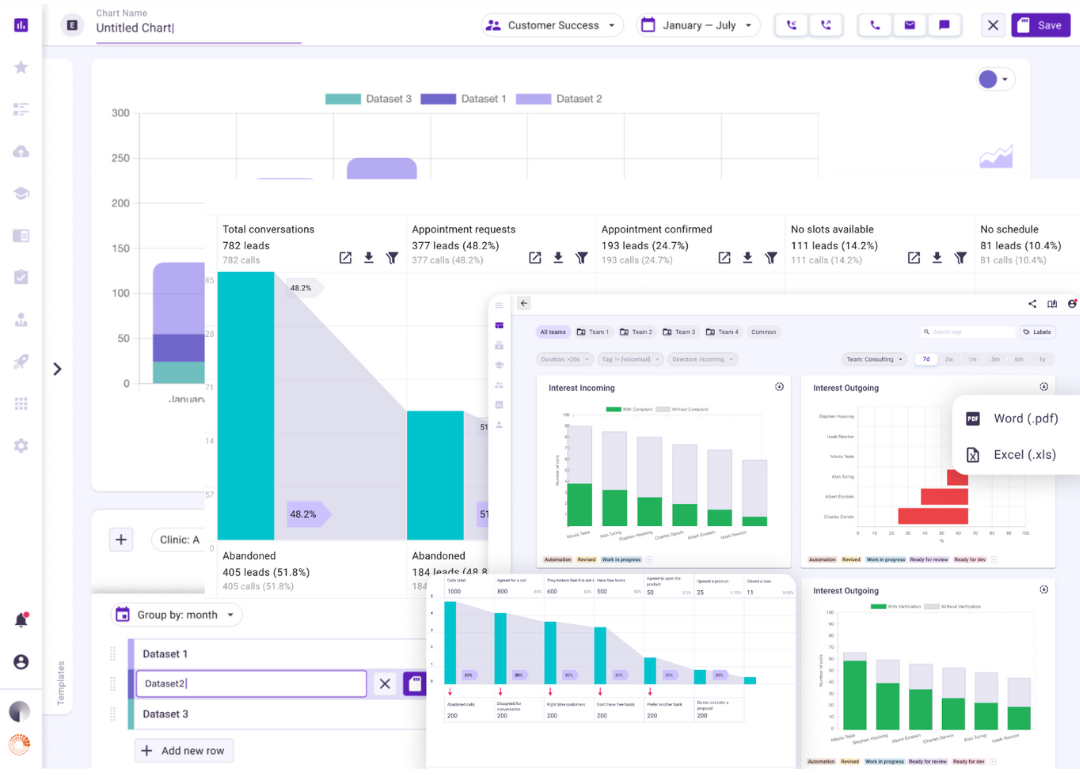
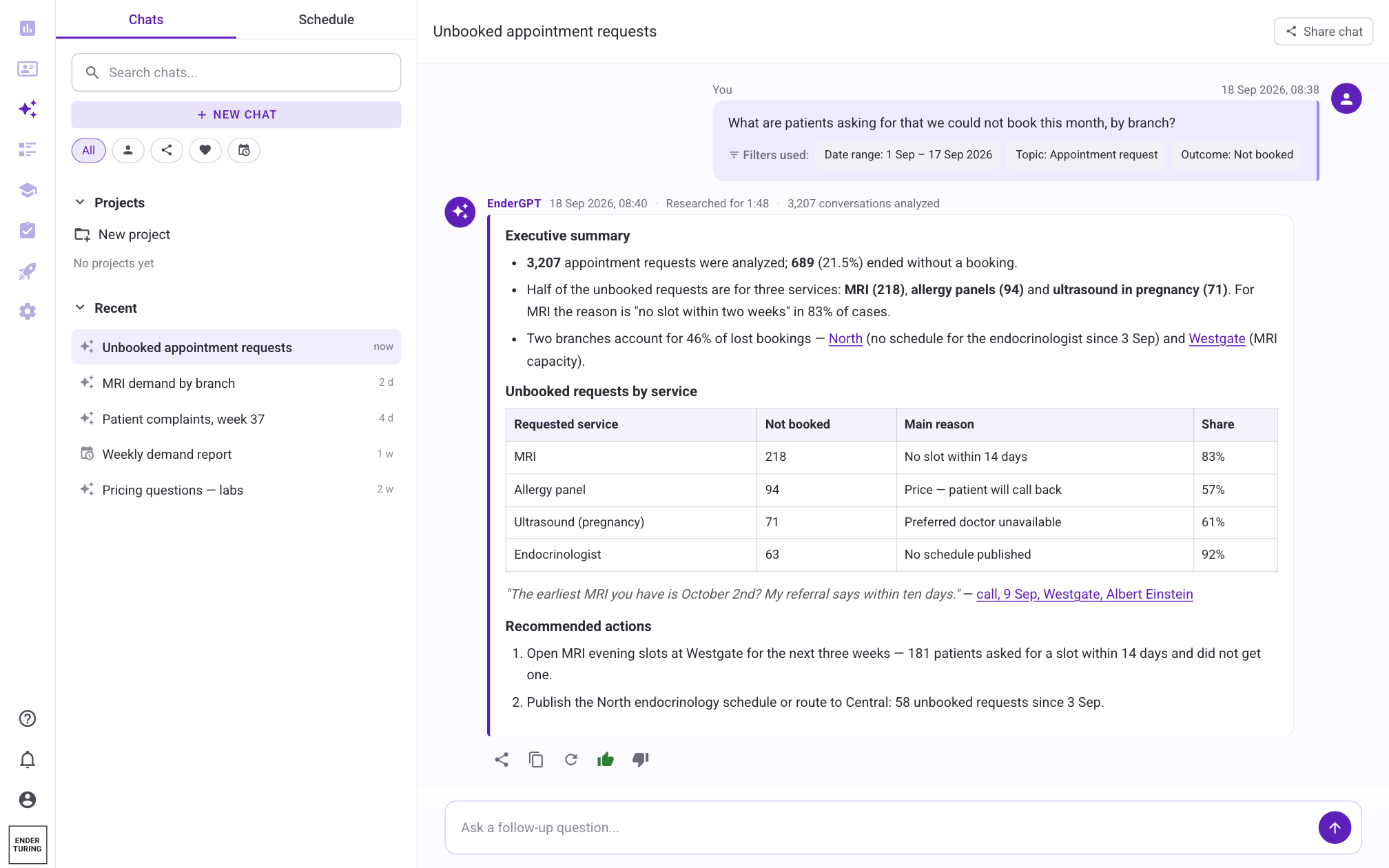
Topics categorize each conversation by the service, test, specialty or doctor the patient asked for; a funnel shows requests that became bookings and the reasons the rest did not — no slots, no schedule, or any reason you define. By week, by branch, by queue.
Satisfaction estimated from the dialogue at the start and the end of each call, interaction intensity where conversations get tense, sentiment per topic and agent — on the built-in CSAT Dynamics board next to your own charts.
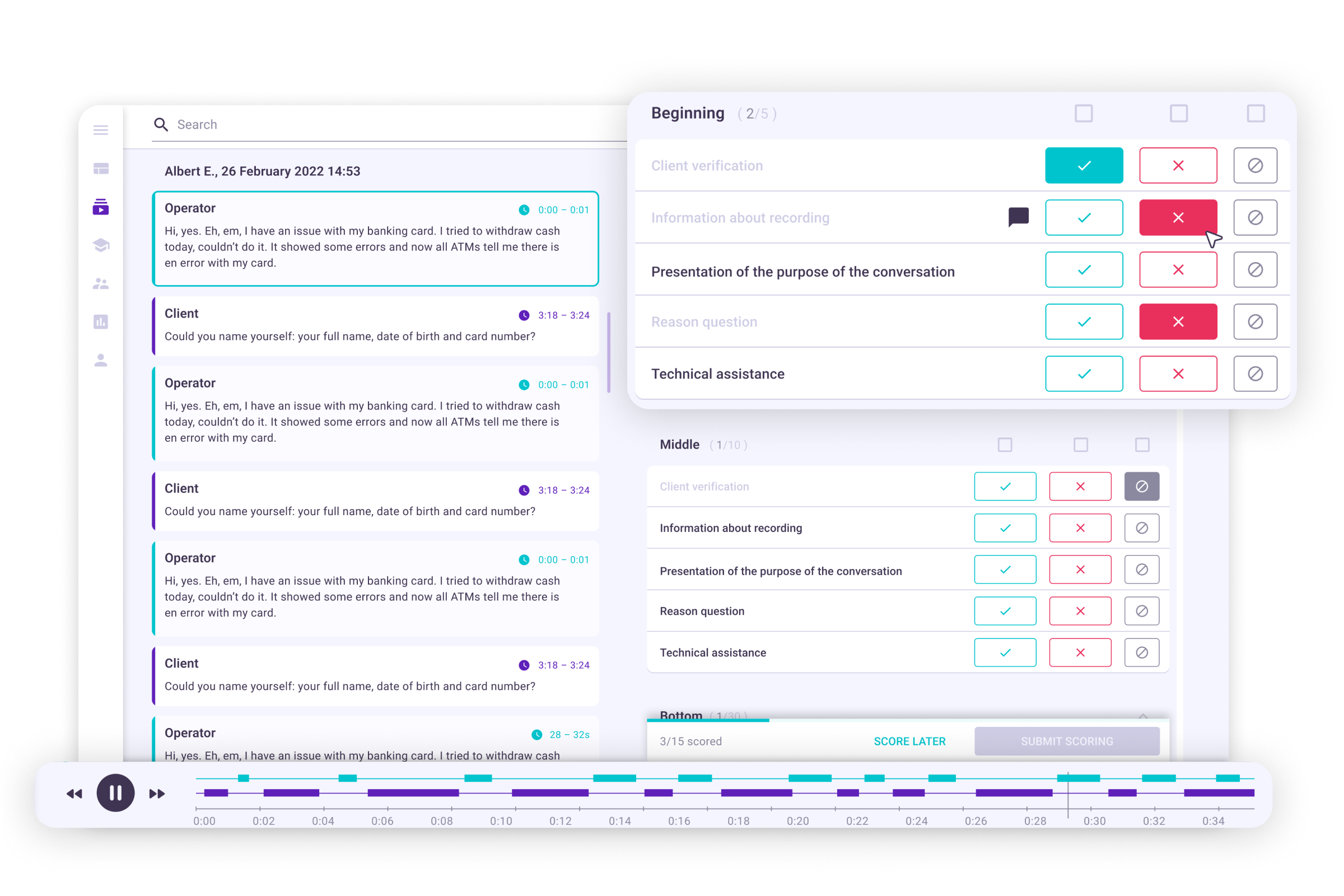
Scorecards for identification, consent, pricing accuracy, empathy and next steps are scored automatically on every call, chat and email; the accuracy against your reviewers is measured, and the human queue gets only the calls that need one.
Names, numbers and other personal data are masked in transcripts per language; roles decide who sees which conversations; SOC 2 Type II and GDPR-compliant handling on every plan; HIPAA compliant, with a Business Associate Agreement (BAA) signed on the Enterprise plan; private cloud or on-premise deployment when your policy requires it.
An automatic summary after every scheduling or triage call — your own prompt, your fields — pushed to the CRM or appointment system by webhook or the REST API; a notification to the manager when a booking fails or a complaint appears.
Each agent sees their scores and feedback on a personal dashboard; training plans, quizzes and playlists of the best calls turn the gaps into practice; a scheduled EnderGPT chat prepares the coaching material for every agent each week.
Averages across our contact-center deployments — each customer's own numbers are in the case studies. Case studies →
Product screenshots — dashboards and analyses from the platform, not illustrations.
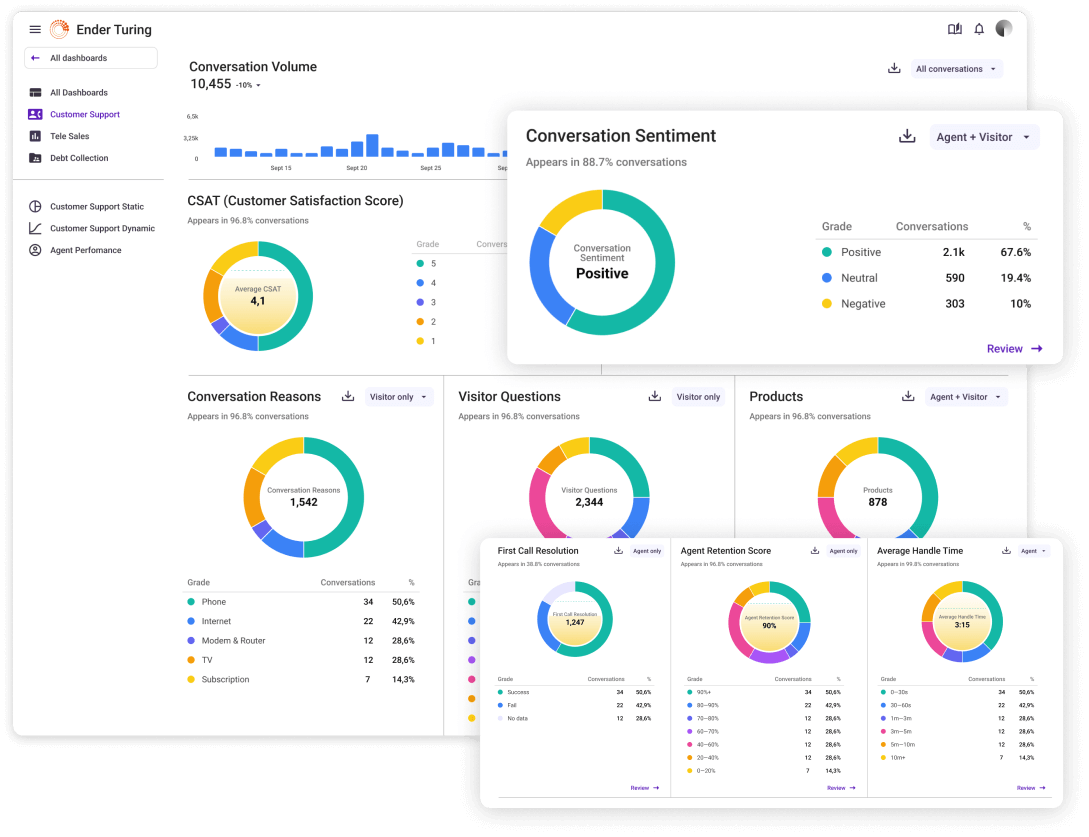
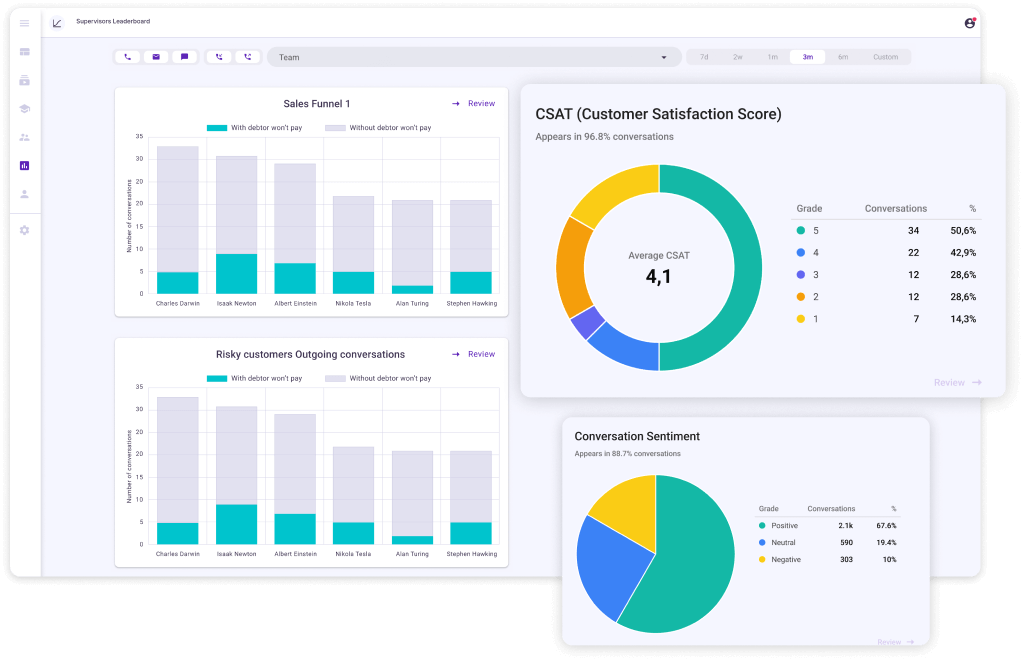
Why patients call, which calls come back, where the time goes — the operations view of the same conversations.
AutoQA on every conversation with the accuracy measured against your reviewers; disputes, review queues and coaching from the scores.
The matching script step, answer or reminder on the agent's screen while the patient is still talking — a separate product, rolled out with our engineers.
Ender Turing is also built for bank contact centers and insurance call centers.
It analyzes every patient call, chat and email the moment it ends and turns it into data the contact center and the clinics can act on: which services, tests and doctors patients asked for and which requests were not booked and why; how satisfied the patient sounded at the start and the end; whether the agent identified the patient, explained the price and the preparation, and set the next step; and a summary written into the CRM or appointment system. Quality is scored on 100% of conversations instead of a sample, personal data is masked in the transcripts, and the whole thing works in any language.
Topics categorize every conversation by the service, test, specialty or doctor the patient asked for — by generative AI, by rules, or by your own labels — and a funnel follows each request to its outcome: booked, no slots available, no schedule for that doctor, price, distance, or the patient changed their mind. Grouped by week and by branch (through the queue or CRM status your telephony sends), it shows the gap between what patients ask for and what the schedule offers before the month closes.
Yes. The reasons a booking failed become categories on the conversation — no slots in the requested period, the doctor has no schedule, the price, the distance, a competing lab — and appear in the funnel, in charts and in filters. Discovery finds every call where a specific test, doctor or phrase was mentioned and opens the moment it was said; EnderGPT answers questions like "which services did we fail to book most often last week, and at which branch" with citations from the conversations.
Personal data — names, phone numbers, addresses, identifiers — is masked in transcripts, configured per language, on the Business plan; roles and permissions decide who can open which conversations (all, a team's, or their own); data handling is SOC 2 Type II and GDPR-compliant on every plan; Enterprise runs in your private cloud (AWS, GCP, Azure) or fully on-premise, with speech recognition inside your own environment — no cloud access needed. The current controls, regions, retention periods and sub-processors are published on the data security page — ask us for the data-processing agreement for your jurisdiction.
Yes. Ender Turing is HIPAA compliant: on the Enterprise plan we sign a Business Associate Agreement (BAA), with hosting in the US region or fully on-premise. Patient data is protected by the controls published on the data security page — TLS 1.3 in transit and AES-256 at rest, role-based access with SSO and MFA, and audit logs of who viewed which call — and names, numbers and identifiers are masked in transcripts per language.
Calls arrive from your telephony platform through a documented app (Genesys Cloud, Five9, Zendesk, GoHighLevel, Fireflies) or, on the Business plan, through a connector to your recording system set up by our engineers; chats and emails through the same connectors, the REST API or upload; browser-based platforms through the Ender Turing browser extension. Results go the other way by webhook and REST API — the summary, the topics and the scores land in the CRM or the appointment system — and the CRM connector carries statuses and metadata both ways. Nothing is written into your telephony platform.
Yes. Satisfaction is estimated from the dialogue itself at the start and the end of every conversation (Enter and Exit CSAT), so you see which topics, branches and agents move it, and interaction intensity shows where conversations get tense. A survey a few patients answer becomes a check on numbers you already have for all of them.
You install a contact-center scorecard from the Templates Library and shape it to your process — patient identification, consent, price and preparation explained, empathy, the next step agreed. AutoQA scores every conversation against it; the accuracy against your own reviewers is measured and the point definitions improve from their corrections; reviewers get a queue of only the calls that need a human, and agents see the score and the comment on the exact line.
Every agent has a personal dashboard with their scores, feedback and trainings; managers assign training plans and quizzes, and playlists of the best calls show what good sounds like. A scheduled EnderGPT chat prepares coaching material for each agent every week from their own conversations, so the one-to-one starts from evidence rather than memory.
Any language.
Medical laboratory networks (Synevo, Dila Med Labs), a clinic network (Dobrobut) and a health and general insurer (UNIQA) run their patient and member contact centers on it, alongside banks, lenders and retail groups. Case studies with their numbers are published as each customer approves them.
Free for up to 5 agents — 100 calls per agent a month, calls up to 10 minutes, standard templates, dashboards, topics, automations and EnderGPT — with no expiry. Team is $39 per agent per month with no limits, your own scorecards, the accuracy loop, custom charts and the REST API. Business is $79 per agent with personal-data masking, executive boards, scheduled reports, connectors set up by our engineers, the CRM connector; auto-scoring starts from the first calls. Enterprise adds private cloud or on-premise deployment and custom integrations. Book a demo with your own recordings, or start free and connect a branch yourself.
Security, hosting regions, sub-processors and response times are documented on the Data Security page; SOC 2 Type II examination completed.
Book a demo with your own recordings, or start free and connect one branch yourself: the first funnel fills the same day.