CSAT is a survey of the survivors
Only a fraction of customers answer, mostly the delighted and the furious. The behavior of everyone else — the ones who went quiet, hesitated, or hung up — never reaches a number.
A satisfaction survey tells you how the few who answered it felt. Ender Turing reads the behavior inside every conversation: how CSAT moved from the opening to the close, how tense the call got and when it peaked, what the customer intended, whether they will call again — and how each agent handles the pressure. Per agent, per topic, on 100% of calls, chats and emails.
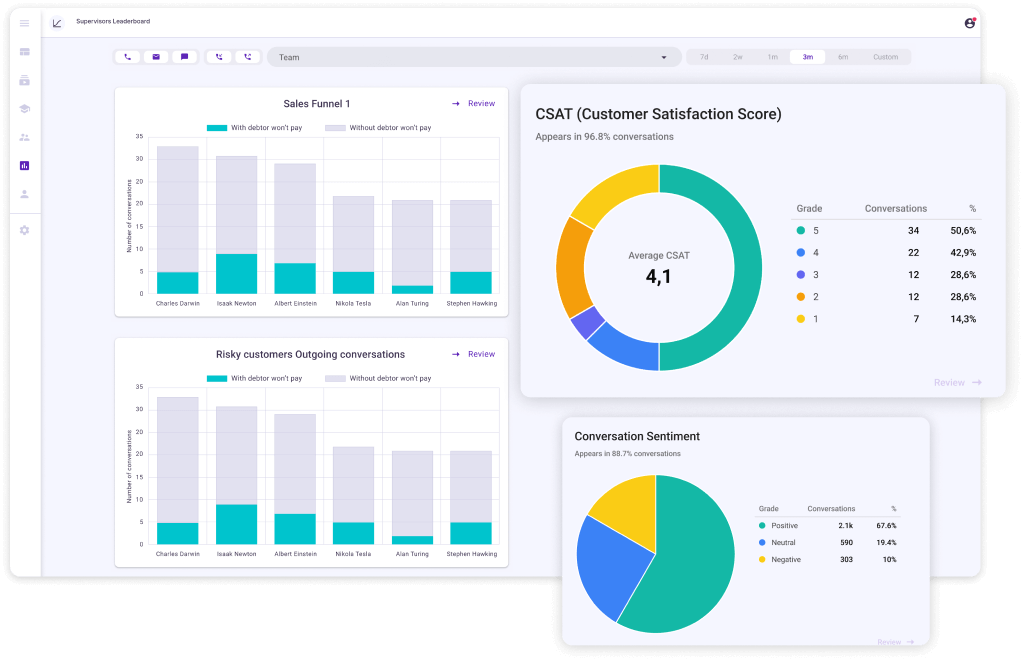
Only a fraction of customers answer, mostly the delighted and the furious. The behavior of everyone else — the ones who went quiet, hesitated, or hung up — never reaches a number.
The customer churned, the collection failed, the upsell was refused. Which sentence turned the call? Nobody can say, because nobody re-listened.
Some agents carry the angriest calls all week. Without a measure of tension per agent, the manager finds out through attrition.
Standard templates for your case are installed on sign-up; everything here works on the free plan.
For every conversation, an entry CSAT and an exit CSAT, the change between them, and a breakdown by agent and by topic — the built-in CSAT Dynamics analysis and board. Not the survey's respondents: everyone who talked to you.
From 1 (calm, cooperative) to 5 (aggression or acute distress), with entry, exit and peak scores per conversation. The Interaction Intensity breakdown shows which agents carry the pressure and which topics create it — the number behind burnout, before it becomes attrition.
Topics classify what the customer wanted and what stage the conversation reached — generative AI tuned on your samples, with its accuracy checked against your reviewers. Tags catch the phrases that matter, split by speaker.
Repetitive-call rules decide when a contact counts as a repeat; silence share, longest monologue, holds and hold time, waiting and response time are measured on every call and available as filters and chart dimensions.
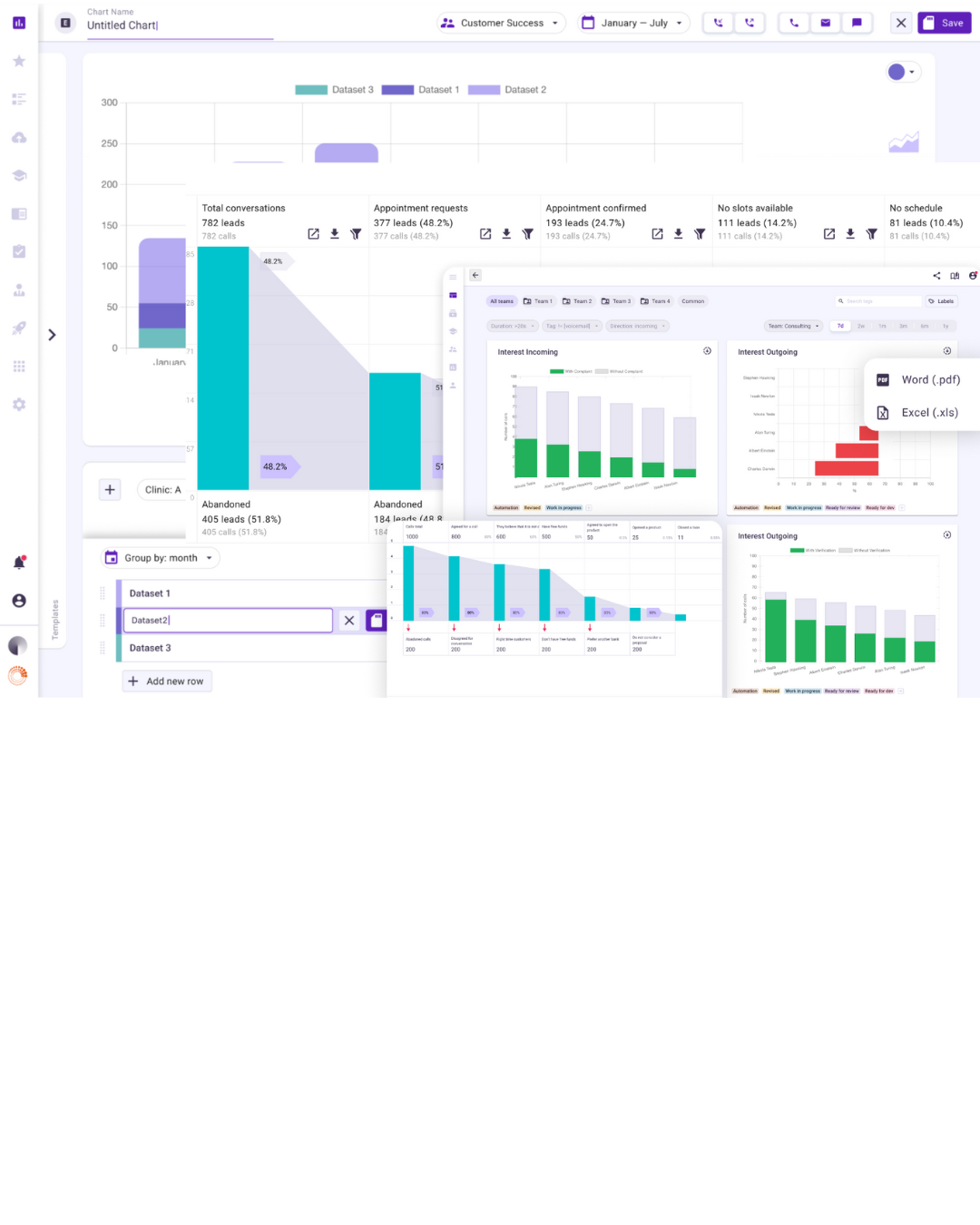
Track how conversations move through the stages you define — identification, offer, objection, promise — and where they drop; by agent, team, campaign and period.
Enders turn a behavior into an action the moment it is detected — a critical-intensity call to the manager, a repeat contact to a reviewer's queue, a topic set for the CRM; Chat with EnderGPT answers "why did tension rise on collections this week?" with the calls cited; the REST API hands the results to your CRM or dialer.
Averages across our contact-center deployments — each customer's own numbers are in the case studies. Case studies →
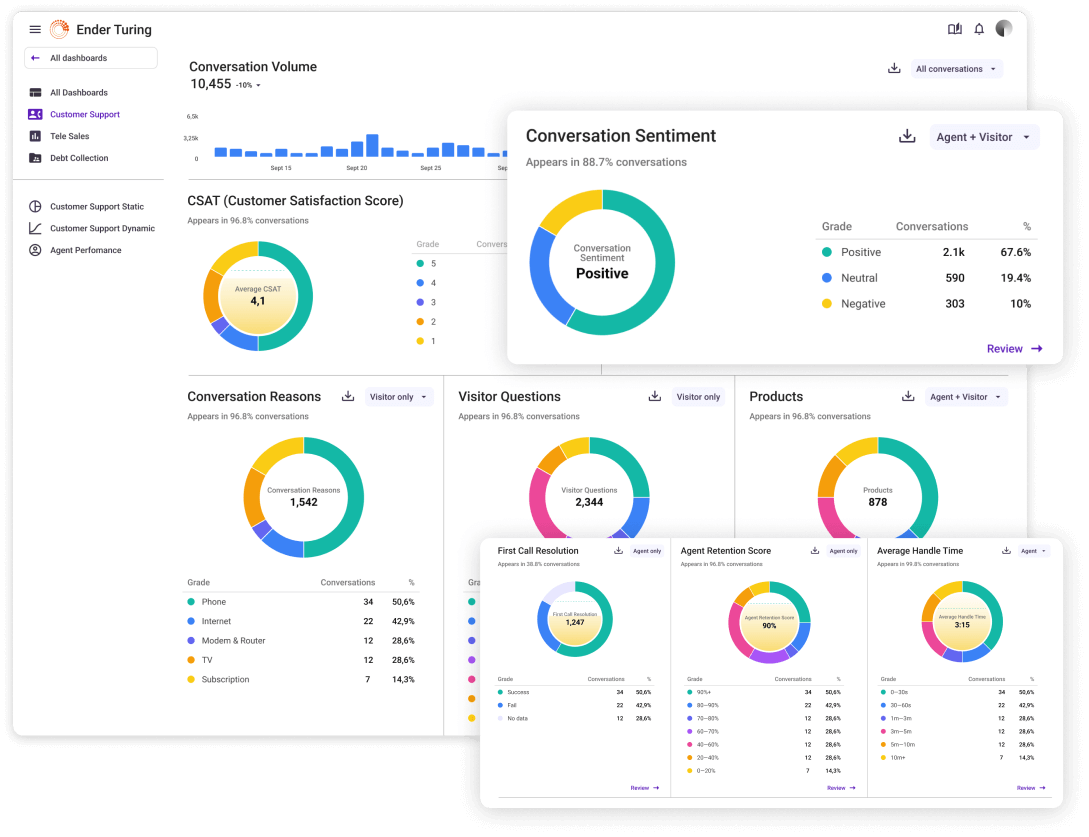
Product screenshots — dashboards and analyses from the platform, not illustrations.
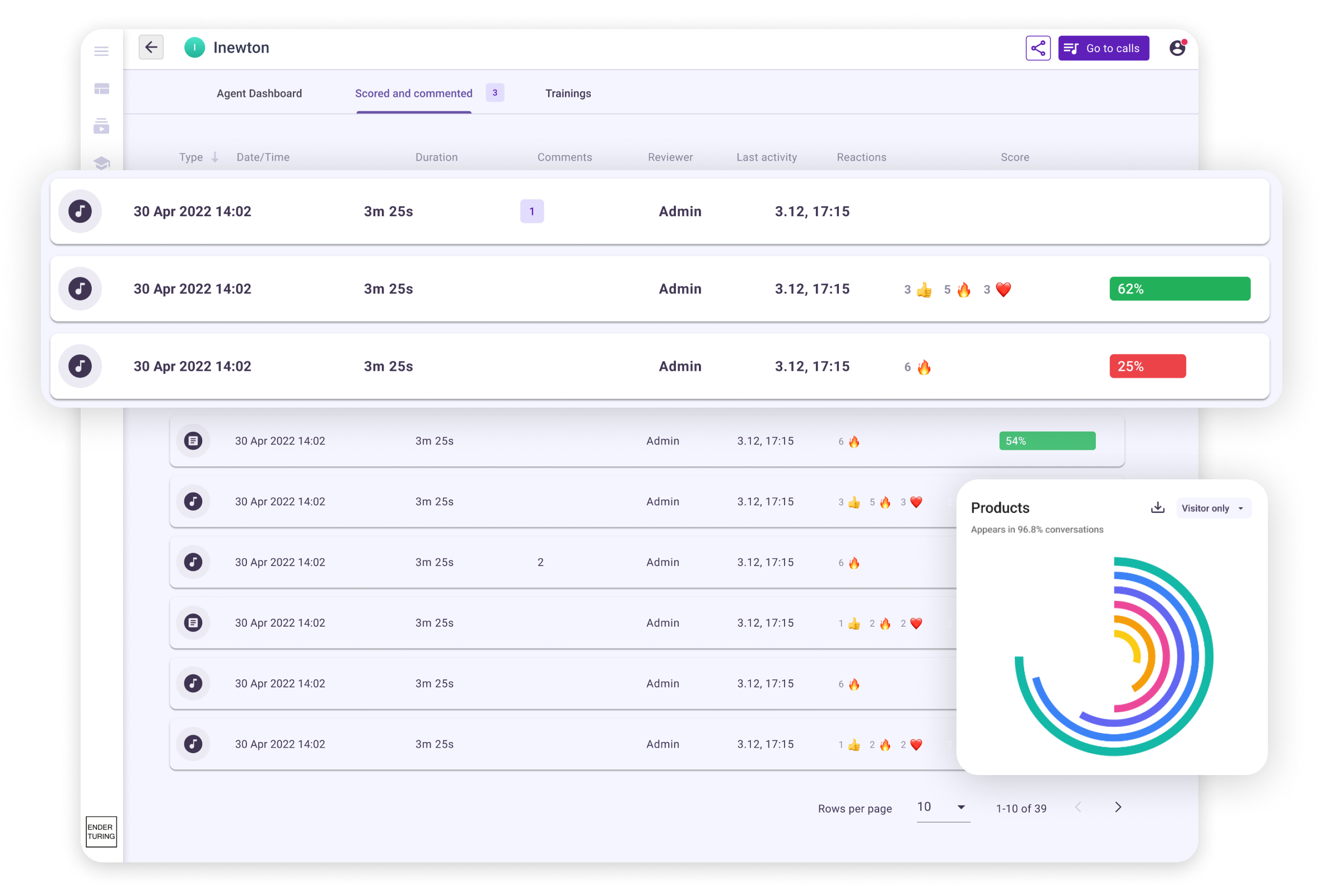
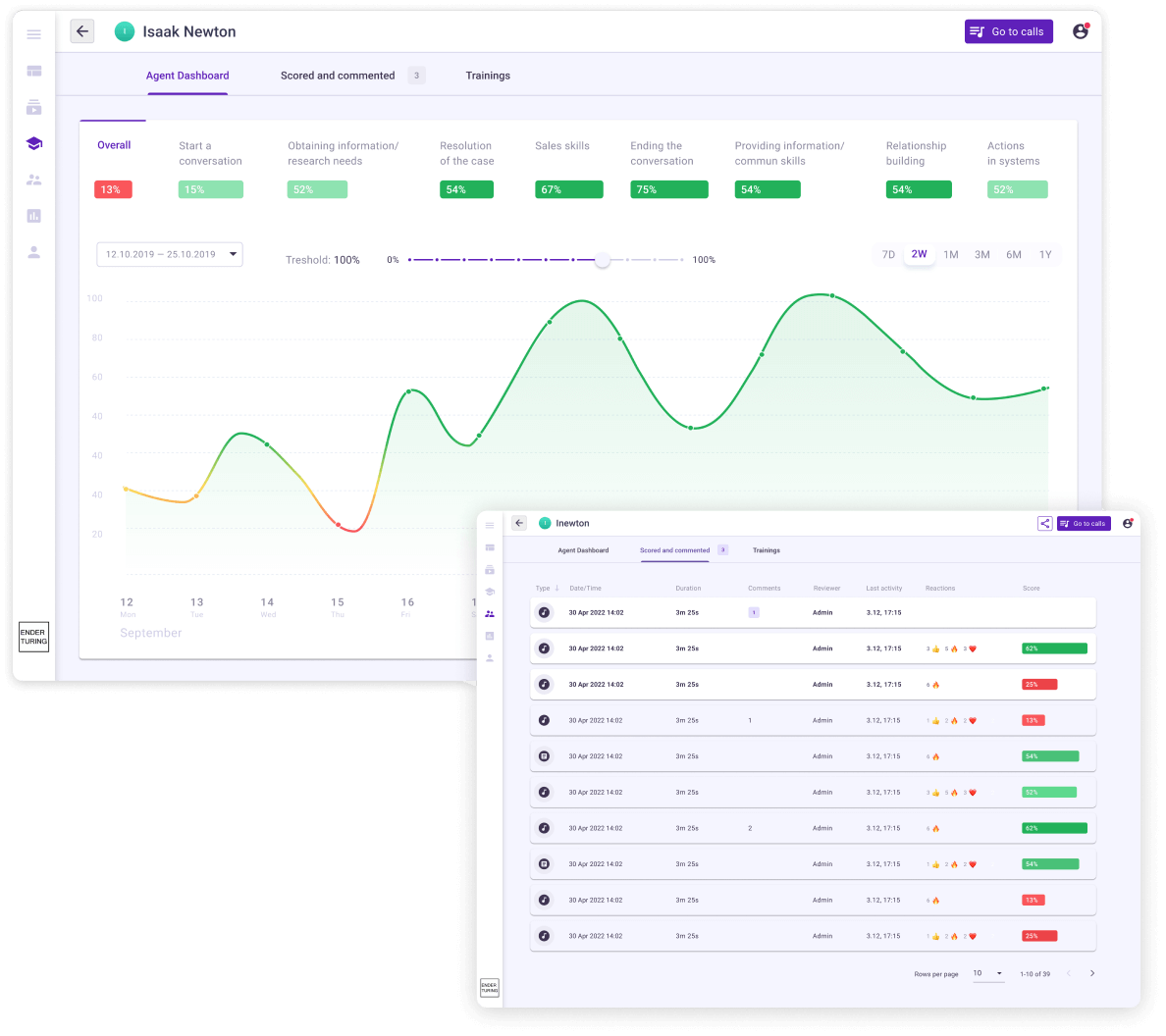
AutoQA answers your scorecard on every conversation — empathy, de-escalation, required lines — with its accuracy shown per point.
Playlists of the calls that went well under tension, training plans with a due date, a weekly EnderGPT coaching note per agent.
Transcripts, topics, metrics, boards — the speech analytics layer that behavior analytics is built on.
The measurement of how customers and agents actually behave inside conversations — satisfaction and tension as they change through the call, intent and reasons, repeat contacts, silence and monologues — on every conversation rather than a survey sample. In Ender Turing it is built on the transcripts and topics of the speech analytics layer and feeds quality scoring and coaching.
Two built-in analyses read every conversation: CSAT Dynamics estimates satisfaction at entry and exit and the change between them; Interaction Intensity rates tension from 1 (calm) to 5 (aggression or acute distress) at entry, exit and peak. Both break down by agent and by topic and appear as ready-made boards when the data is there.
Inside Ender Turing, yes: Enders are rules that act the moment a pattern is detected — a promise-to-pay topic sets a tag, a critical-intensity call notifies the manager, a repeat contact lands in a reviewer's queue — in-app or by email. To trigger a call in your dialer or a task in your CRM, the REST API exposes the conversation, its topics, scores and intensity to your systems; Ender Turing does not dial itself.
Yes. Per agent: silence share, longest monologue, holds, response time, the tension they carry (Interaction Intensity by agent), the scorecard points on empathy and de-escalation, and the tags they use — the picture of how an agent behaves under pressure, across every call, not the three someone listened to.
Yes. Conversations are calls, chats, emails and web records on the same topics, tags, scorecards and boards; the timing metrics apply to calls, the CSAT and intensity analyses to every channel with text.
Any language.
The measures are visible and explainable — entry, exit and peak per conversation, broken down by agent and topic — rather than a proprietary index; the topics are tuned on your samples with their accuracy shown; there is a free plan and per-seat pricing; and the connection to your platform is read-only.
Yes, with no expiry: up to 5 agents, 100 calls per agent a month, calls up to 10 minutes, with the standard templates. Team is $39 per agent per month with no limits; Business adds executive boards, scheduled reports, connectors and implementation engineers.
Security, hosting regions, sub-processors and response times are documented on the Data Security page; SOC 2 Type II examination completed.
Sign up, connect a platform or upload recordings; CSAT dynamics, intensity and topics are on the boards the same day.