The one-to-one runs on three calls
A team lead has time to listen to a few calls per agent per month. The feedback is anecdotal, the agent knows it, and the argument is about the sample rather than the skill.
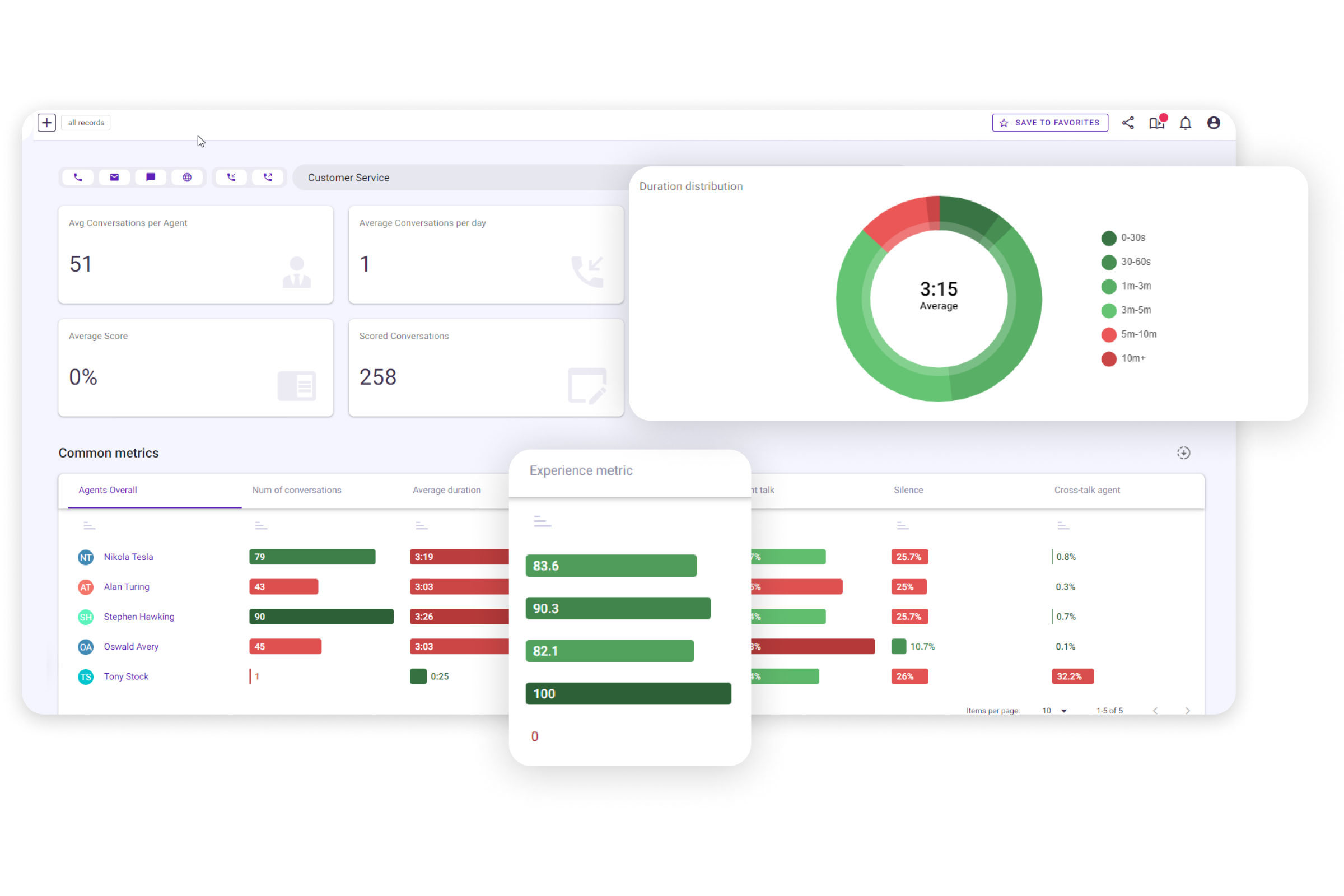
Agent coaching usually means a monthly one-to-one built on a handful of calls and a spreadsheet. Ender Turing gives every agent their own dashboard fed by scores from 100% of their conversations, writes a coaching note per agent every week with EnderGPT, gives the team lead playlists of the calls to coach with, and turns a finding into a training plan with a due date and a quiz — so the improvement is measured on next week's calls, not remembered from last month's.
A team lead has time to listen to a few calls per agent per month. The feedback is anecdotal, the agent knows it, and the argument is about the sample rather than the skill.
Results arrive in a report, weeks later, without the call attached. Nobody learns from a number without the moment that produced it.
The best call of the month is never shared; the new script is a PDF; onboarding is whoever has time. Ramp takes months and the same mistakes repeat.
Standard templates for your case are installed on sign-up; everything here works on the free plan.
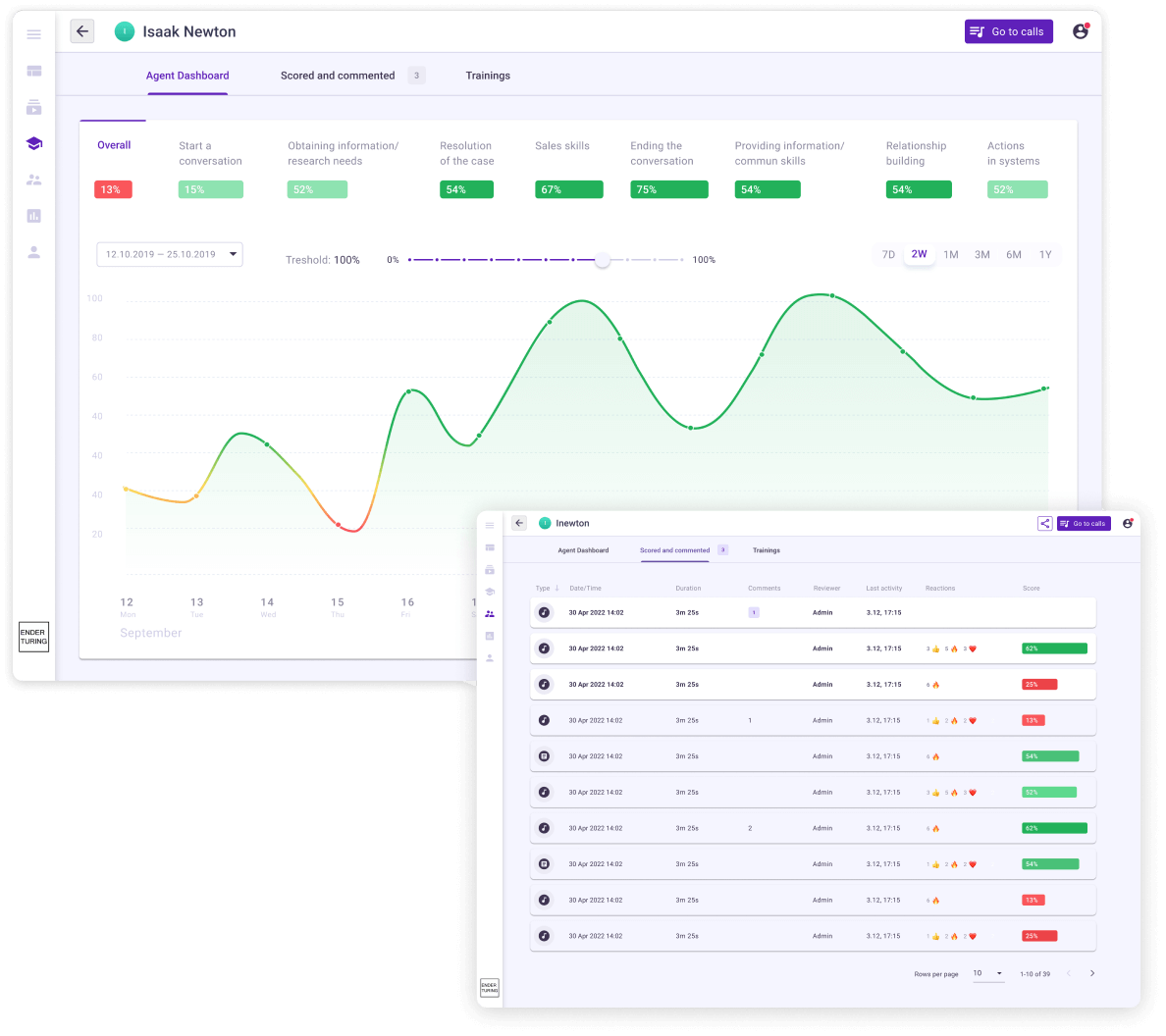
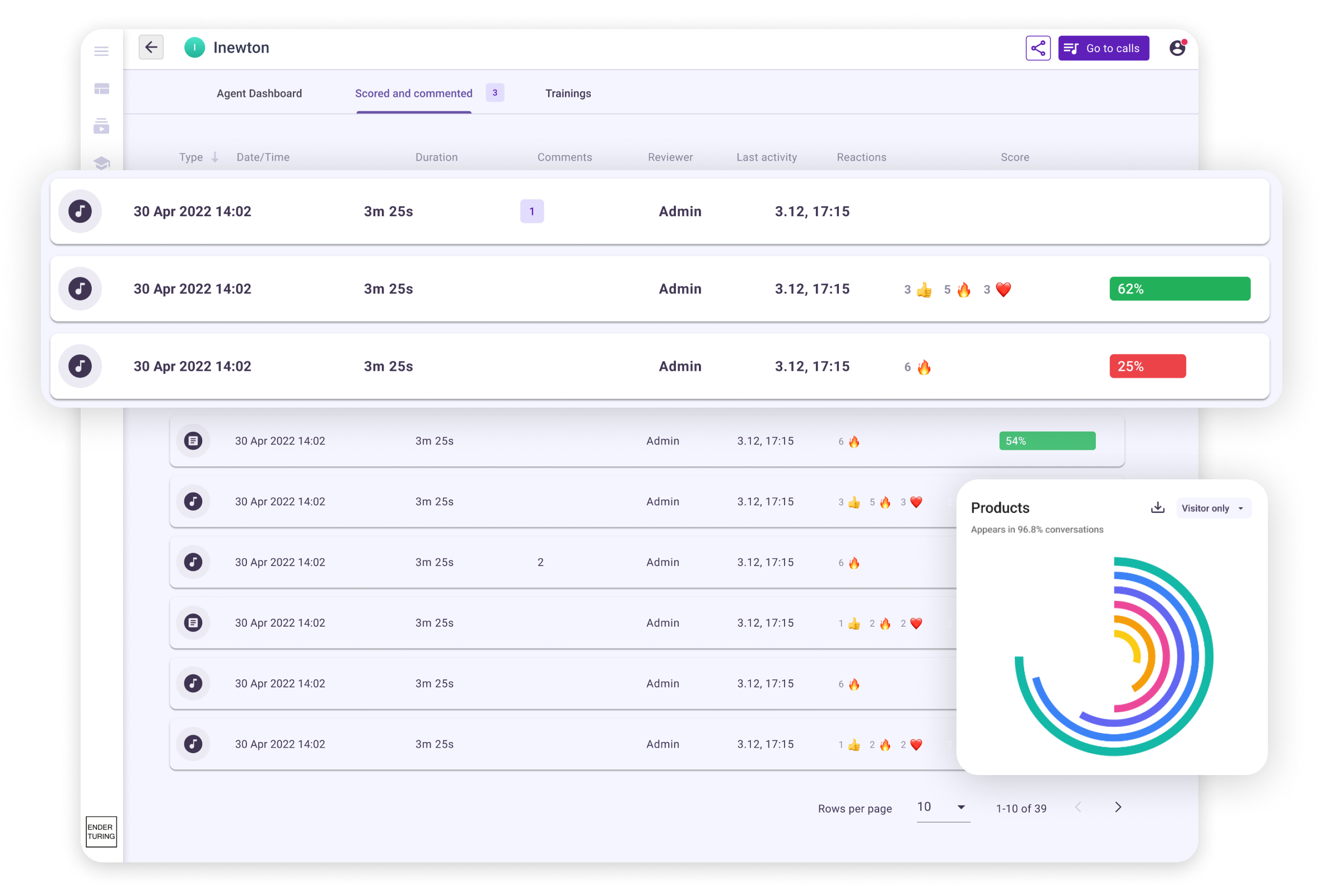
My Dashboard shows each agent their average quality score, latest scores per scorecard and per point, scores over time, reviewed conversations with the supervisor's feedback, and their assigned training — the same numbers the team lead sees, with the call attached.
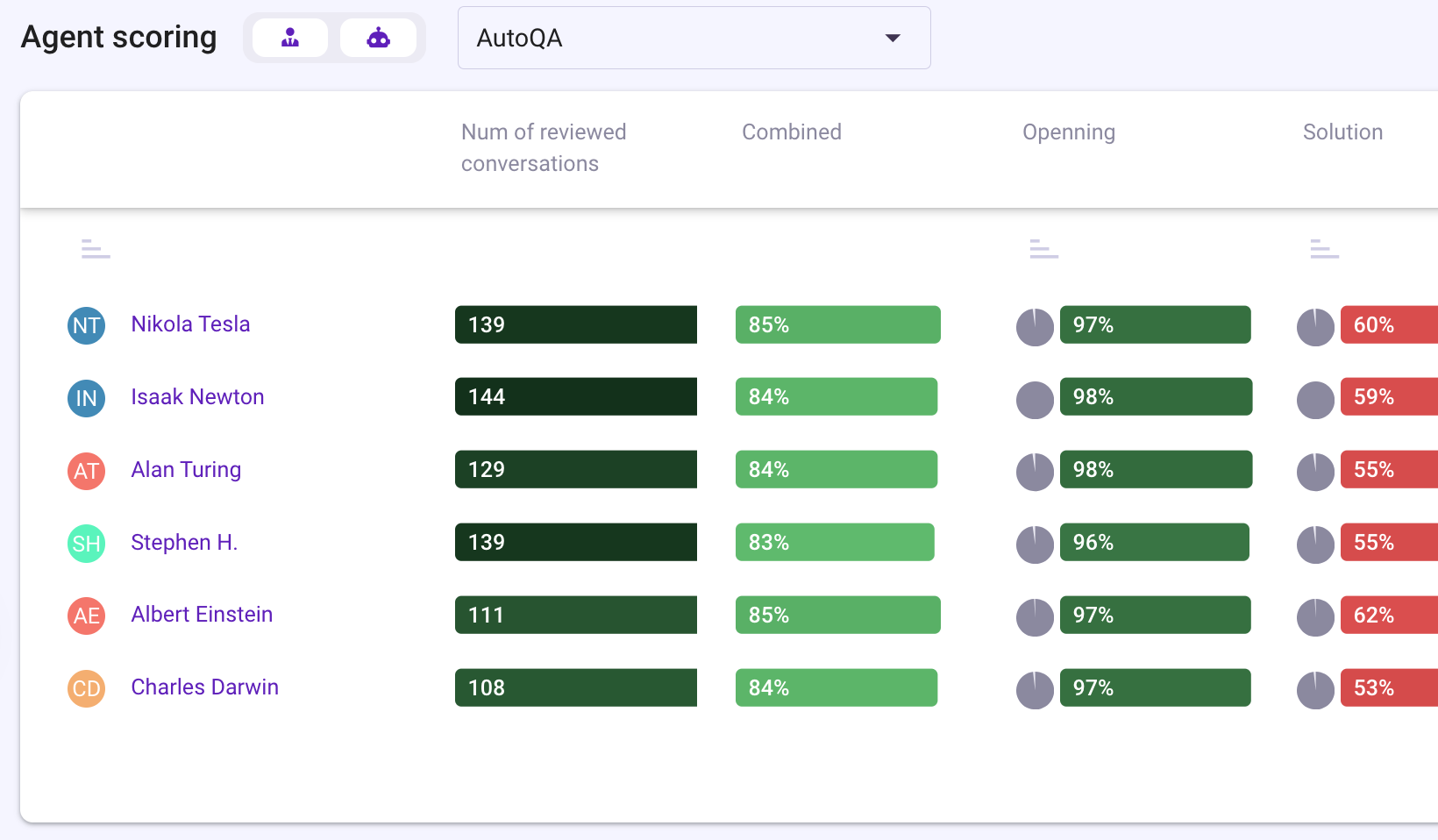
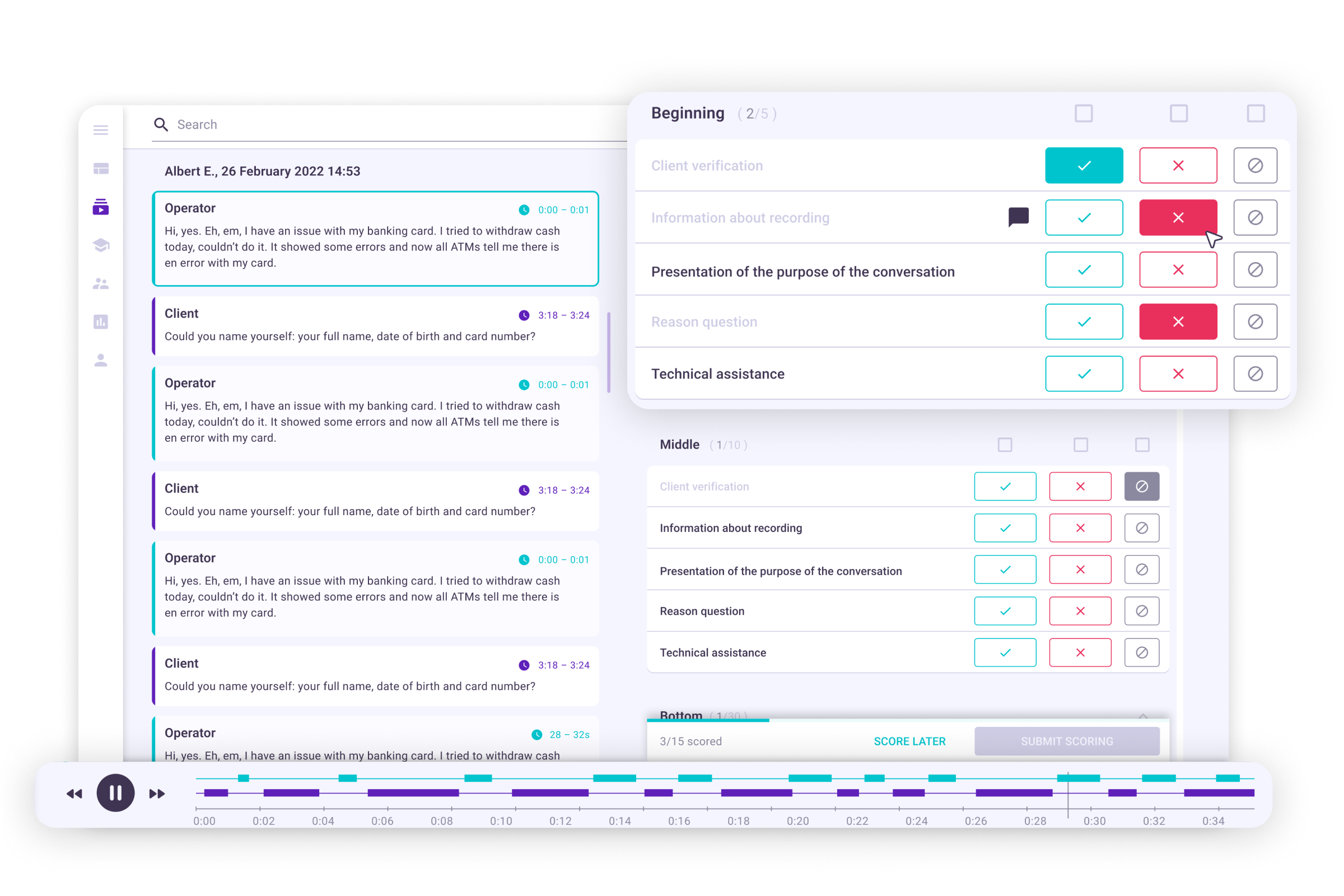
AutoQA scores every call, chat and email on your scorecard, with its accuracy against your reviewers shown per point; reviewers add comments and mentions in the transcript, agents can dispute a point. The coaching conversation starts from the whole picture.
Group conversations into shareable collections — the calls that converted, the objection handled well, the escalation that went wrong — and reuse them for coaching, calibration and skills training.
Bundle documents, audio and video from EnderDrive with playlists and quizzes into skills; assemble skills into a training plan with a due date; assign it to agents and track per-agent progress and quiz results. Agents work through it under Own Trainings.
Scheduled chats of the "for agent" type run your question — "what should this agent do differently next week, with examples from their calls?" — on a daily, weekly or monthly schedule and produce a separate generative report for every target agent or team, from that agent's own conversations. Define it once; the coaching material arrives on schedule.
The team dashboard tracks key metrics, scoring trends and tag analytics with fast filters by team, campaign and agent; C-level boards put quality next to volume for the executive; teams carry their own scorecards; Enders add a failing call to a reviewer's queue or notify the manager the moment a critical point fails.
Averages across our contact-center deployments — each customer's own numbers are in the case studies. Case studies →
Product screenshots — dashboards and analyses from the platform, not illustrations.
Ender Assist puts the right script or reminder on the agent's screen while the customer is still talking — coaching before the score exists.
AutoQA on 100% of conversations, with the accuracy of every scorecard point measured against your reviewers.
Topics, funnels and metrics on every conversation — the analytics that tells you what to coach next.
Software that turns quality scores, metrics and coaching into one loop per agent: where each agent stands, which calls to learn from, what to train next, and whether it worked on the following calls. In Ender Turing that loop is My Dashboard for the agent, playlists and training plans for the team lead, and dashboards and boards for the manager — all fed by scores from 100% of conversations.
Software that measures how each agent handles customer conversations and turns the result into improvement. In a contact center that means quality scores per scorecard and point on every call rather than a sample, each agent's own dashboard and trend, and the coaching that follows — playlists of the calls to learn from, training plans with quizzes, and a weekly coaching note per agent written by EnderGPT. Ender Turing runs that loop on the platform you already use.
Yes. A scheduled chat of the "for agent" type asks EnderGPT your question on a schedule — every Monday, say, "summarize this agent's week: what went well, the three moments to improve, with the calls" — and produces a separate generative report for each target agent or team from that agent's own conversations. The team lead reviews, the agent gets specific material every week, and nobody writes it by hand.
The conversation moves from the sample to the skill. Instead of arguing about the three calls the lead happened to hear, agent and lead look at the same scores across every conversation, open the exact moments behind them, and put the good ones in a playlist. Improvement is then measured on next week's scores, not on impressions.
Yes. My Dashboard shows each agent their average quality score, latest scores by scorecard and point, scores over time, reviewed conversations with supervisor feedback, and assigned training. Agents can dispute a scored point; the reviewer approves, voids or partially approves.
Yes. Store documents, audio, video and images in EnderDrive; bundle them with playlists and quizzes into skills; assemble skills into a training plan with a due date; assign it to new agents and track progress and quiz results per agent. The same plan carries a new script or a new product to the whole floor.
Through the loop, not the report: the score shows the gap per criterion, the playlist shows what good sounds like, the training plan and quiz close the gap, and the next week's scores show whether it closed. Enders automate the hand-offs — a failing call to the reviewer's queue, a critical miss to the manager — so nothing waits for the monthly meeting.
Yes. The same dashboards, playlists and training plans serve a sales or customer-success team of three; the free plan covers up to 3 users with no expiry. Sales teams usually start from the calls that converted as the first playlist.
Quality scores per scorecard and per point, score trends over time, conversation volume and duration, silence share, longest monologue, holds, response and waiting time, tags and topics per agent, script adherence from compliance rules, and CSAT or NPS where your platform supplies them — filterable by team, campaign and period.
A free plan and transparent per-seat pricing instead of an enterprise quote; the accuracy of the automated scores shown per point against your own reviewers; and an agent-facing dashboard, playlists and training plans included rather than sold as separate modules. It connects read-only to the platform you already run and works in any language.
Yes, with no expiry: up to 5 agents, 100 calls per agent a month, calls up to 10 minutes, with the standard scorecards and dashboards. Team is $39 per agent per month with no limits; Business adds executive boards, scheduled reports, connectors and implementation engineers.
Security, hosting regions, sub-processors and response times are documented on the Data Security page; SOC 2 Type II examination completed.
Sign up, connect a platform or upload recordings; scores, dashboards and the first playlist are ready the same day.