Manual QA saw 5% of calls
Supervisors listened to a random 5%, so the bank had a fractional picture of service quality — and the supervisors were buried in scoring instead of analytics and coaching.
OTP Bank's retail contact center serves help desk, retail and premium banking, debt collection, identity verification and customer-experience surveys. Supervisors could review about 5% of calls by hand; call categories were guessed by busy agents; coaching was a distant priority. Here is what changed when every call and chat went through Ender Turing.

Customer-experience results from the first case study, sales results from the second — each as the team published it.
Customer satisfaction improved by 18 points, from 6.8 to 8.0 on a 10-point scale. Full write-ups: customer experience · sales growth.
A retail bank's contact center is where most customer contact happens — about 30% of retail customers reach their bank by phone. The quality of those conversations decides NPS, and NPS moves the number of financial products per customer. OTP Bank could see almost none of it.
Supervisors listened to a random 5%, so the bank had a fractional picture of service quality — and the supervisors were buried in scoring instead of analytics and coaching.
About 2 of every 100 FTEs in banking contact centers go to sorting calls, yet agents pick the first category they see; reports came back with half the calls marked "Other".
Fatigued agents stretched handle time, stayed on the line after the customer hung up, or left customers in silence — behavior nobody could see across thousands of calls.
One supervisor for 10–15 agents, all of it manual: listen, score, give feedback, handle escalations. A one-to-one once a week was the best case.
Categories as granular as the operation needs, assigned to every call automatically by the AutoQA module — the head of the contact center sees exactly why customers call, without wrap-up codes.
How it works today →Handle-time tricks, dead line after the customer hangs up, long silences: tracked close to real time per agent, with the evidence one click away — separating burnout from a lack of knowledge from gaming the system.
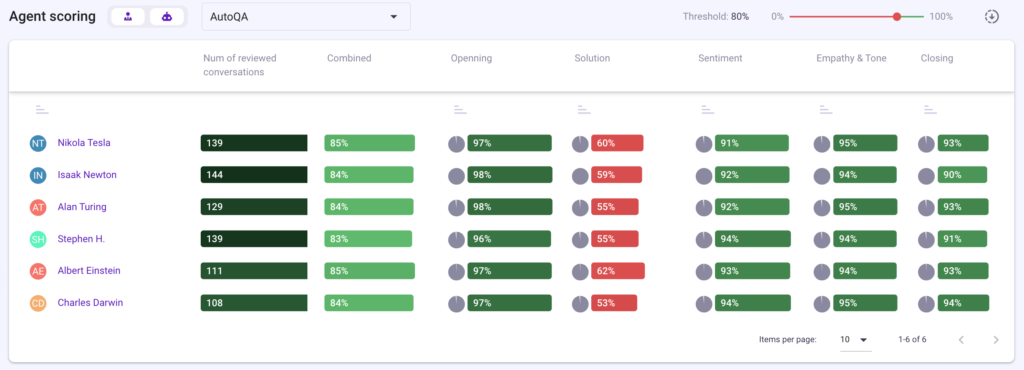
How it works today →Every call, chat, email and web form scored on unlimited scorecards seconds after it ends; managers get the reasons behind low CSAT in real time and supervisor time moves to focused evaluations and feedback.
How it works today →Individual training plans, playlists of the best and worst calls, quizzes and uploaded materials — so newcomers learn from real conversations without waiting for a supervisor.
How it works today →Surveys reach a selective sample; the sales team needed the satisfaction of every customer before calling. Ender Turing scores each conversation, so outbound lists start with customers who are happy with the bank.
How it works today →Why offers fail and where — automatically, per agent and per script — so the team builds funnels, gathers insights, tweaks the process and sells better again.
How it works today →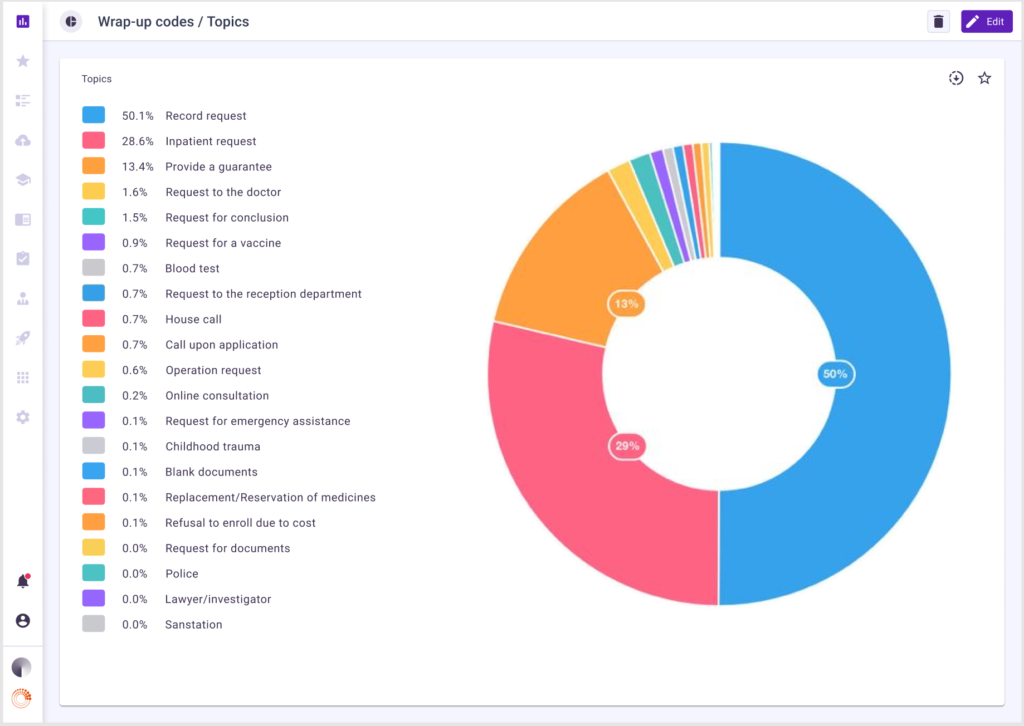
“Give your staff the opportunity to work with people and develop their communication skills, instead of wasting time on the unproductive task of manually selecting wrap-up codes.”
“My advice to everyone about to start using Ender Turing for outbound sales calls: make your first sales, build funnels, gather insights from the funnels, tweak the process, and sell better again!”
The retail contact center: help desk, retail and premium banking, debt collection, identity verification and customer-experience surveys — calls, chats, emails and web forms. The numbers are that operation's own, measured against its baseline before the rollout.
Automated call categorization, call-avoidance detection, evaluation of 100% of conversations on its own scorecards, self-training for agents, a per-customer CSAT for the sales team and sales funnels built from the conversations — each is a documented product function today.
The 2024 case study reports NPS and CSAT scores rising from 47% to 62%; the separately approved statement is that CSAT improved by 18 points, from 6.8 to 8.0 on a 10-point scale. They are kept in their own units and not recalculated into each other.
Yes: the free plan has no expiry — up to 5 agents and 100 calls per agent a month — and auto-scoring starts from the first call. Connect the platform you run or upload a week of recordings.
Security, hosting regions, sub-processors and response times are documented on the Data Security page; SOC 2 Type II examination completed.
Averages across our contact-center deployments — each customer's own numbers are in the case studies. Case studies →
Connect the platform you run or upload recordings: every conversation categorized and scored in seconds, call avoidance visible, coaching from real calls. Free plan with no expiry.