Take a BPO with an attrition problem it has accepted as structural. Annual agent turnover runs near 60%, which it considers normal for the industry. Its fix is a recruiting machine optimized to replace agents as fast as they leave. The cost of this churn is enormous but it has become invisible — just the cost of doing business.
Look at when the attrition actually happens, and the annual number can hide the real pattern: many of the departures come in the first 90 days, which SQM Group finds is when most agents quit. Agents are recruited, trained, put on the floor, and lost before they ever become productive. The company pays full recruiting and training cost for agents who generate weeks of below-ramp output and then quit. The 60% annual number isn’t a retention problem spread across the year. It’s a 90-day onboarding cliff plus normal turnover on the survivors.
Structuring new hires into the right teams from day one is the mechanical part of this fix — see how to manage teams in Ender Turing.
This is the pattern in most high-attrition contact centers, and it changes the entire economics of the problem. Fixing 90-day attrition isn’t a retention initiative. It’s the highest-ROI operational change available, because every agent who survives the cliff is an agent you don’t have to recruit and train again.
Why the First 90 Days Decide Everything
The early period of a contact center role is uniquely brutal, and the onboarding cliff comes from a few specific dynamics.
The competence gap is at its widest. New agents are taking live customer calls before they’re equipped to handle them. Every difficult call is a confidence hit. The gap between what the job demands and what the agent can do is largest exactly when the agent is most fragile.
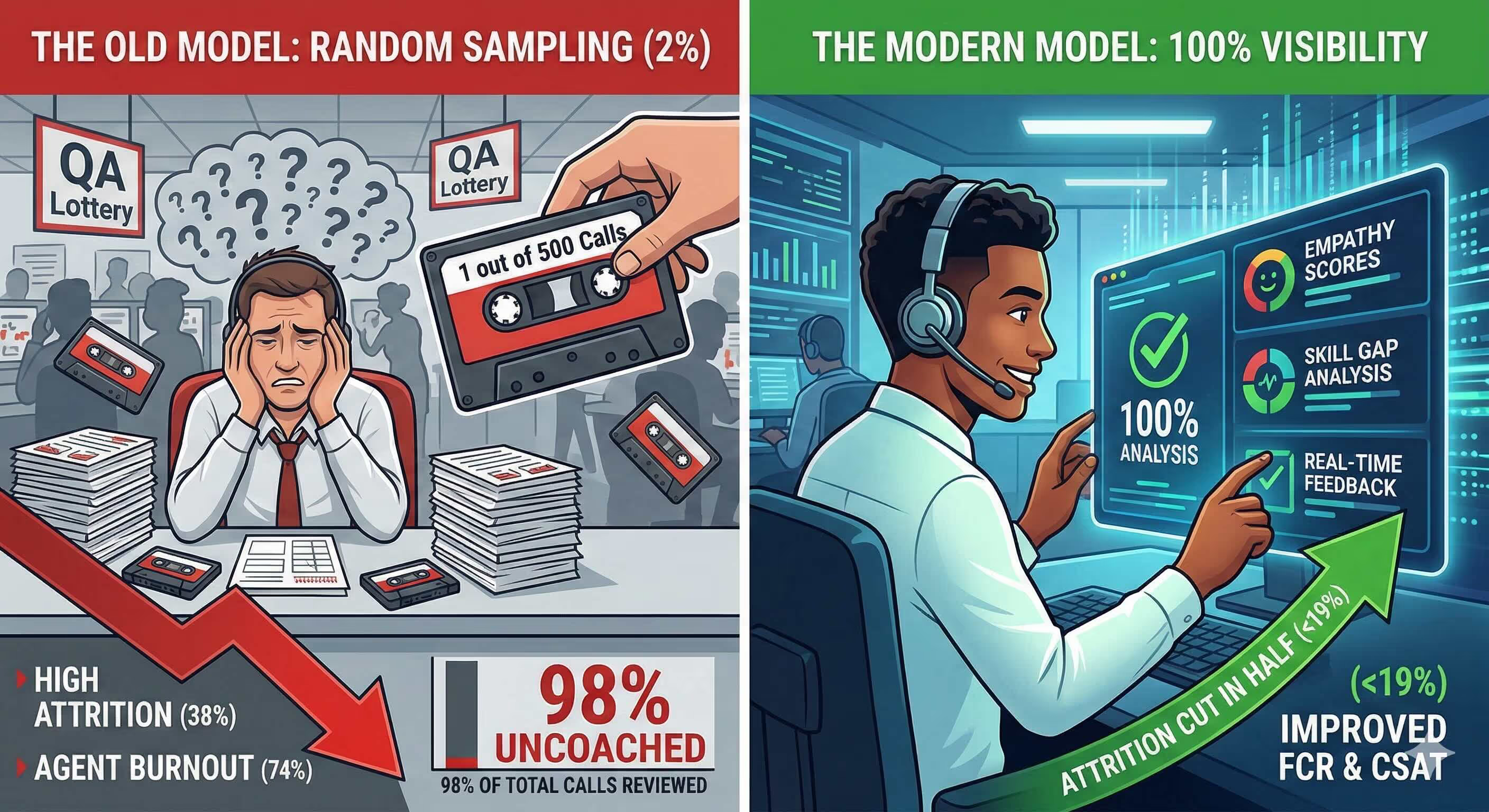
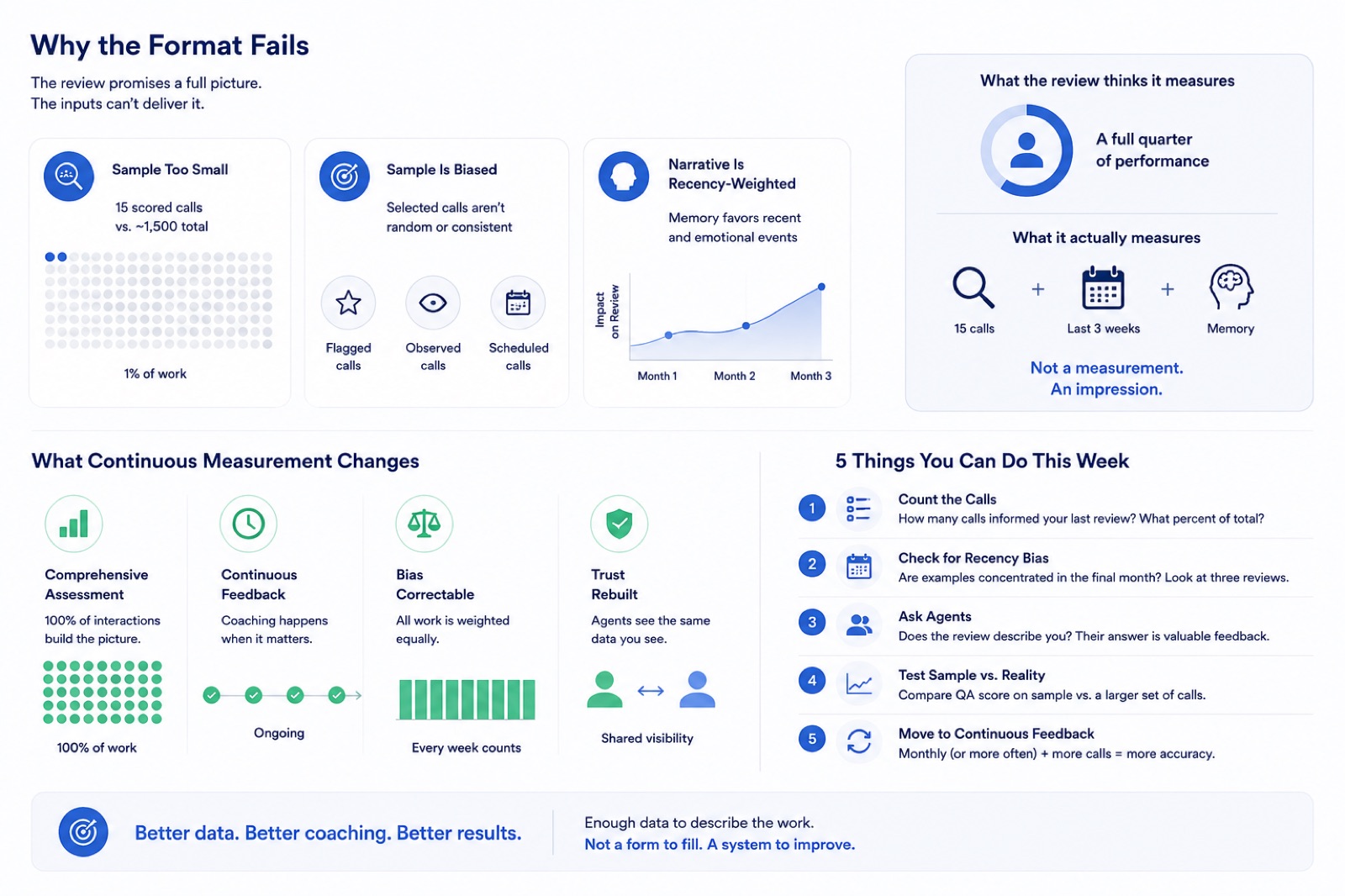
The feedback is sparse and lagging. New agents are usually scored on the same thin QA sample as everyone else, which means they get a handful of data points in their most critical period. They’re flying blind on whether they’re improving, and the silence reads as failure.
The support is front-loaded and then withdrawn. Most onboarding programs concentrate support in the first two weeks — classroom training, shadowing, nesting — and then taper sharply. The agent hits the floor solo right around the time the real difficulty begins, and the support structure has already moved on to the next cohort.
What the Data Shows About Who Survives
When agent management analytics track new agents across all their calls rather than a sample, the predictors of 90-day survival become visible early.
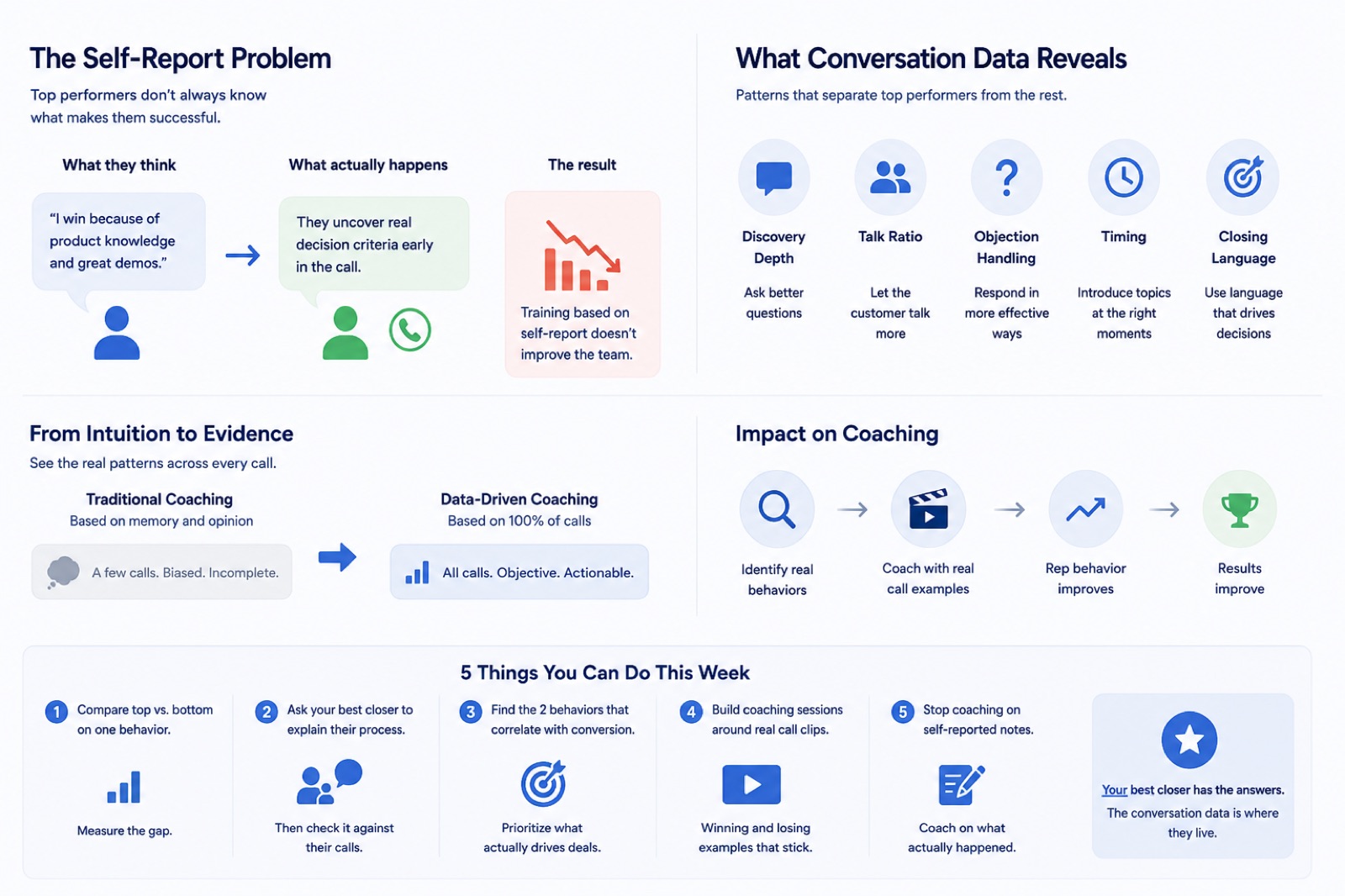
Early call patterns predict survival. Agents who develop certain conversation patterns in their first two weeks — appropriate talk ratios, recovery from difficult moments, question-asking when uncertain — survive at much higher rates than agents who develop struggle patterns. These signals appear long before attrition does, which means intervention is possible.
The struggle is identifiable per-call-type. New agents don’t fail uniformly. They fail on specific call types where the competence gap is widest. Comprehensive analytics show exactly which call types are breaking which agents, which makes targeted support possible instead of generic encouragement.
Confidence trajectory is visible in the conversation. Sentiment and language patterns in an agent’s own speech reveal their confidence trajectory. Agents trending toward disengagement show it in their calls before they show it in their resignation. The window to intervene exists if anyone is watching.
Rebuilding Onboarding Around the Cliff
The fix isn’t more classroom training. It’s restructuring support to match where the cliff actually is.
Support has to extend through the cliff, not stop before it. The agent needs the most help in weeks three through ten, not just weeks one and two. Onboarding programs built to look complete at two weeks are abandoning agents right before the hardest part.
Feedback has to be dense in the early period. New agents need comprehensive, fast feedback on their actual calls, not a thin quarterly sample. The first 90 days is when feedback matters most and when sampling-based QA delivers least.
Difficulty has to be sequenced. Putting new agents on the full call mix immediately maximizes the competence gap. Routing them toward call types they’re equipped for first, and expanding as they develop, keeps the gap survivable.
Five Things You Can Do This Week
1. Break your attrition down by tenure. What percentage of departures happen in the first 90 days? The number reframes the problem from retention to onboarding.
2. Calculate the cost of a 90-day departure. Recruiting plus training plus below-ramp output, for an agent who generates no lasting value. This is the ROI ceiling for fixing the cliff.
3. Map where new agents struggle. Which call types break your new hires? Comprehensive call analysis shows it. That’s where to focus early support.
4. Audit your support taper. When does onboarding support drop off relative to when the cliff hits? If support ends before week three, it ends before the hard part.
5. Watch confidence trajectory on your current cohort. The agents trending toward departure are showing it in their calls now. Intervention is only possible if someone is looking.
The 90-day cliff isn’t industry destiny. It’s the predictable result of onboarding programs designed to look finished at two weeks, feedback systems too thin to help in the critical period, and support that withdraws exactly when it’s needed most. Every agent who falls off the cliff is one you’ll pay to recruit and train again — which makes the cliff the most expensive thing in the contact center that nobody’s measuring.