Picture a financial services firm replacing its legacy PBX with a modern VoIP platform. The selection process takes eight months. The procurement team builds a 142-line feature comparison matrix. The chosen vendor scores highest on price, features, and reference checks. Implementation goes smoothly.
Eighteen months later, the same firm tries to deploy speech analytics and can’t. The audio quality from the VoIP system is below what modern recognition engines need for reliable transcription. Background noise suppression, codec choice, recording bit depth — none of these were on the 142-line matrix. They are technically subjective, often vendor-specific, and the buying team didn’t know to ask. The platform does exactly what it was sold to do. It just can’t support the next thing the contact center is going to need.
This is a common failure pattern in VoIP procurement. The features that sell phone systems are not the features that determine whether you can extract value from them five years later. The interesting questions live below the comparison matrix.
What the Comparison Matrix Hides
Most VoIP evaluations focus on a similar set of dimensions: per-seat pricing, included features (IVR, queueing, recording), integrations, uptime SLAs, mobile apps, geographic coverage, support model. These matter, but they don’t differentiate vendors as much as the matrix implies, and they don’t predict the operational outcomes that determine long-term value.
The dimensions that actually differentiate, and that almost never show up in standard comparisons, fall into a few categories.
Audio quality under realistic conditions. Most vendors demo on optimal connections, with optimal hardware, in optimal acoustic environments. Production audio is none of these. The codecs the platform uses, how it handles packet loss, how it interacts with the headsets your agents actually use — these determine whether your recordings are useful or just present.
Recording fidelity and architecture. Whether calls are recorded in compressed or lossless format. Whether stereo separation is preserved (agent and customer on separate channels) — a fundamental requirement for most analytics, and not universal. Whether the recording archive is queryable, exportable, and accessible via API.
API depth. Marketing claims of “open APIs” cover a wide range of realities. Some platforms expose minimal endpoints sufficient for basic CRM integration. Others provide deep access to call events, recordings, real-time streams, and configuration. The difference is invisible at procurement and decisive at year two.
Telemetry and observability. When something goes wrong — dropped calls, audio issues, integration failures — how visible is it to your operations team. Some platforms expose minimal logs and require vendor support tickets for any investigation. Others provide real-time observability that lets your team diagnose issues independently.
The Six Questions Vendors Don’t Want You to Ask
Compress two years of post-migration regret into six questions worth raising before signing, and these are the ones.
1. Are recordings stored as stereo, with agent and customer on separate channels? If not, speech analytics, QA scoring, and most modern conversation intelligence become substantially harder. Many platforms default to mono. Stereo separation needs to be configured, and on some platforms it isn’t available at all.
2. What audio codec is used for the recording archive, and what’s the bit rate? G.711 and Opus at sufficient bitrates are usable for downstream analytics. Heavily compressed audio is not. Vendors don’t volunteer this because it sounds like a technical detail. It determines whether your archive is an asset or just storage.
3. Can your platform stream real-time audio to a third-party system via API? Real-time agent assist, live sentiment analysis, and real-time compliance monitoring all depend on this. Some platforms support it natively. Some require partner integrations. Some don’t support it at all.
4. How are recordings deleted, and can deletion be audited? Compliance frameworks increasingly require auditable deletion processes for personal data. Vendors will say their platform “supports GDPR.” Ask them to show you the deletion audit trail. The demos get shorter.
5. What happens to my data if I leave? Export speed, format, completeness, and time-bounded retention all matter. Some platforms make leaving structurally expensive by limiting bulk export. The right time to ask is before the contract, not three years later.
6. Show me a real customer with 1,000+ seats who deployed this within the last 18 months, and let me talk to them. Reference customers from five years ago aren’t reference customers for the platform you’re buying today. Implementations have changed. Scale has changed. AI capabilities have changed. Recent references at your scale are the only ones that predict your experience.
The Mid-Market Pattern
Mid-market contact centers (200-1,500 seats) face a particular procurement trap. The platforms aggressively targeting this segment compete heavily on price and feature checkbox count, which makes the comparison matrix look definitive. The differentiators that matter most for medium-term operational value get less attention because they’re not obvious selling points.
The result is that mid-market deployments often select platforms optimized for cost and short-term feature parity, then struggle two years later when they want to deploy conversation analytics, AI-assisted QA, or real-time agent capabilities. The platform technically supports these — the vendor said so — but the underlying audio quality, recording architecture, or API depth turns out to be inadequate for production use.
The fix isn’t expensive procurement. It’s the six questions above, asked early enough to matter.
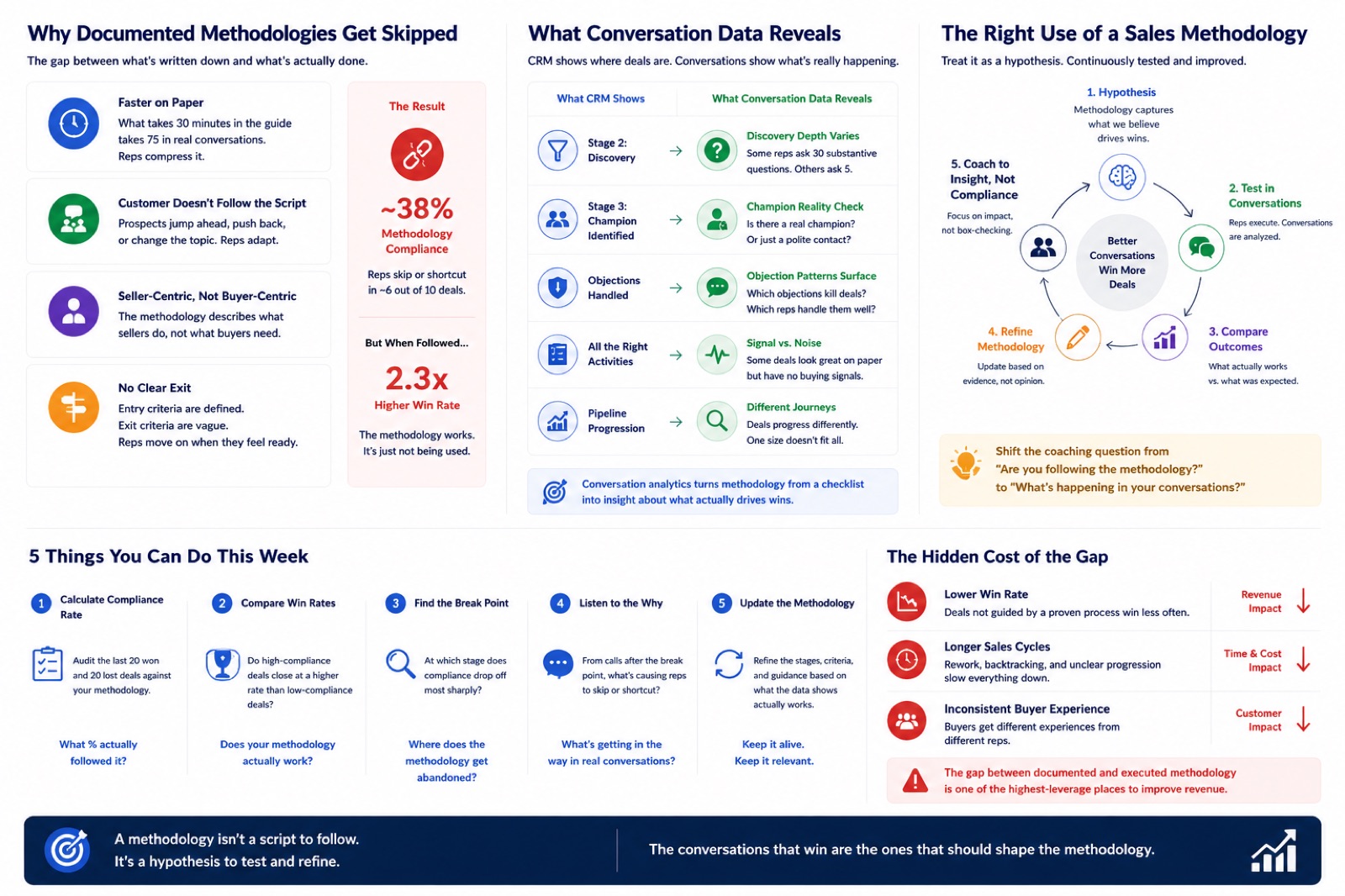
Five Things You Can Do This Week
1. Audit your current recording configuration. Are calls stored stereo or mono? What codec? What bit rate? If you don’t know, your downstream analytics may be running on degraded inputs.
2. Pull one recording and try to transcribe it with a modern engine. Word error rate on your own audio tells you what your platform actually delivers, independent of vendor claims.
3. List the integrations you’ll need in two years. Real-time streaming, AI overlays, CRM bi-directional sync. Check current platform support for each. Gaps you find now are easier to negotiate than gaps discovered post-contract.
4. Ask your current vendor for an export quote. Even if you’re not leaving, the answer reveals how dependent you’ve become. The harder it is to leave, the less negotiating power you have at renewal.
5. Talk to one customer of your platform who deployed in the last 18 months at your scale. If your vendor can’t introduce you, that’s information. If they can, the conversation will be more valuable than any analyst report.
The VoIP platform you’re choosing today is the foundation everything else will sit on for the next five to seven years. The features on the comparison matrix tell you what it does. The six questions tell you whether it’ll support what you’ll actually need it to do. Most procurement processes ask the first kind. The expensive lessons live in the second.