Run a calibration exercise the standard way: five QA analysts, ten randomly selected calls, blind scoring against an existing 28-criterion scorecard. It is meant to be a quick check before a larger QA process refresh.
The result is often uncomfortable. In an illustrative run, the gap between the highest scorer and the lowest scorer averages 23 points out of 100, and on three of the calls it exceeds 30 points: two analysts score the same call a 91 and a 58, working from identical criteria, listening to the same audio, in the same room.
The first reaction is usually to question the methodology. Run the test a second time, get similar results, and the question shifts to something harder. If the QA team can’t agree on what a good call sounds like, what exactly is the QA program measuring?
The answer, uncomfortably, is opinion — even when the scorecard has been honed over years, the criteria are specific and the training is extensive.
This isn’t an unusual situation. McKinsey estimates that manual QA scoring is 70–80% accurate, against more than 90% for a largely automated process, which sounds reasonable until you do the math on what a 20–30% error rate means for the agents being evaluated, the coaching decisions being made, and the compliance reports being filed based on those scores.
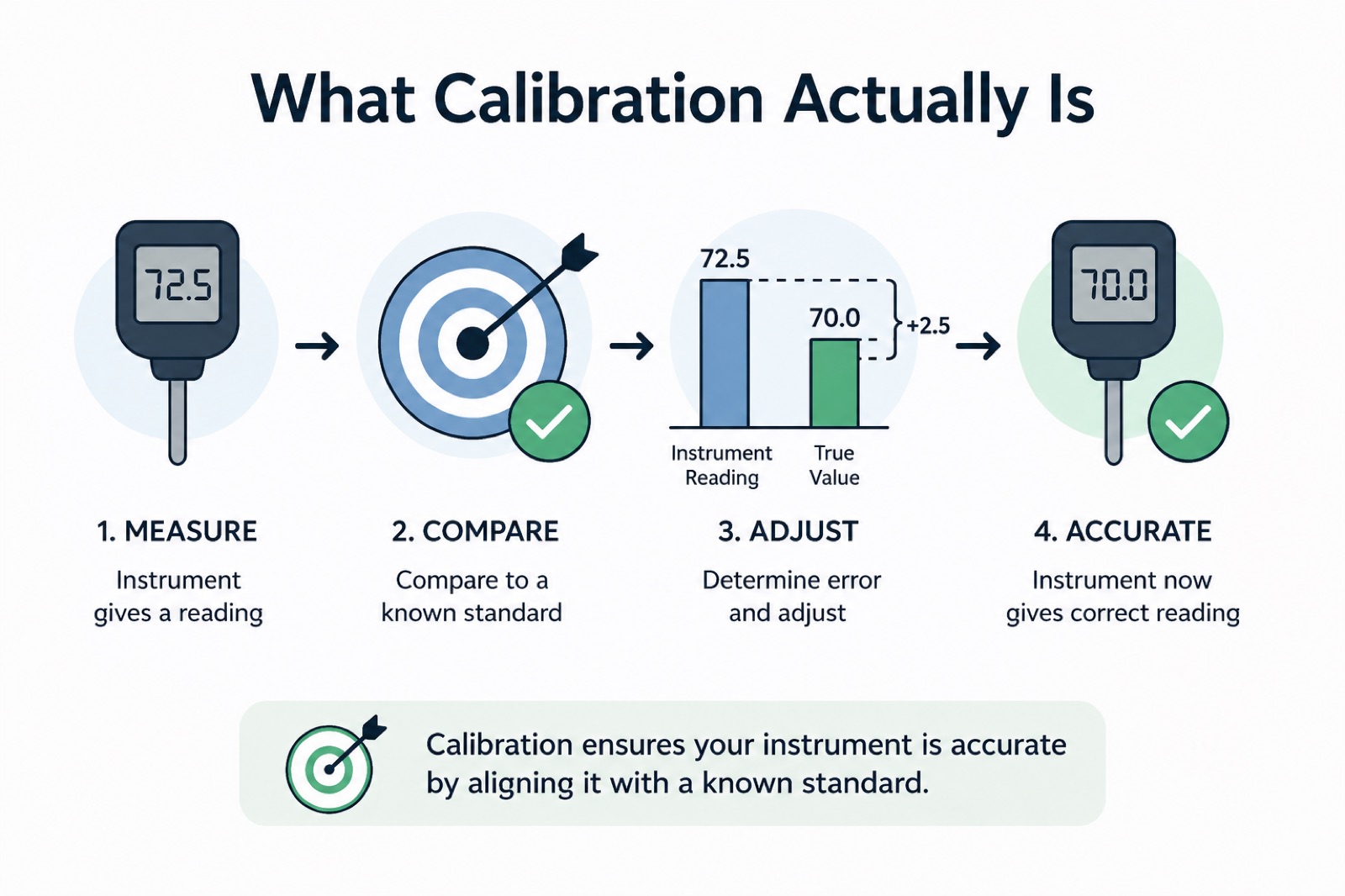
What Calibration Actually Is
Calibration in QA refers to the process of ensuring that different evaluators score the same interaction in the same way against the same criteria. The term covers several related practices:
Inter-rater calibration. Multiple QA analysts score identical interactions and discuss any scoring disagreements until a shared interpretation of each criterion emerges. The goal is to reduce variance in how the criteria are applied.
Intra-rater calibration. A single analyst scores their own work over time consistently. The goal is to prevent score drift as the analyst’s understanding of the criteria evolves, hardens, or relaxes.
Calibration with stakeholders. QA analysts calibrate not just with each other but with operations leaders, training leads, and (in regulated industries) compliance officers. The goal is to ensure the QA program is measuring what the business actually cares about, not what the QA team thinks is important.
Calibration with the customer. This one is rarely formalized but it’s the most important. SQM Group found that for 81% of agents, QA scores did not correlate with customer satisfaction. A QA program that scores agents highly on calls customers rated poorly has a calibration problem with reality, not just with other analysts.
When calibration is missing or weak, every downstream artifact of the QA program is compromised: coaching priorities, performance management decisions, compliance reporting, and the trust agents place in the scores they receive.
Why Manual Calibration Fails Structurally
The traditional model — periodic calibration sessions where QA analysts gather to discuss disagreements on a small sample of calls — has structural limits.
Sample size. A monthly calibration session reviewing 5-10 calls cannot meaningfully address scoring patterns across the thousands of calls scored by the team in that month. Whatever consensus emerges from the calibration session applies cleanly only to the discussed cases.
Edge case bias. Calibration sessions naturally focus on disagreements, which tend to cluster in ambiguous edge cases. The clearly-scoreable middle of the distribution — which represents 80%+ of actual calls — gets less attention because nobody disagrees about it.
Decay over time. Inter-rater reliability achieved at a calibration session decays measurably within 4-6 weeks as analysts return to scoring solo. Without continuous reinforcement, the team drifts back toward individual interpretations.
Hawthorne effect on calibration itself. When analysts know they’re being calibrated, they apply criteria more carefully. The reliability measured in the session is systematically higher than the reliability of day-to-day scoring. This isn’t dishonesty. It’s normal human behavior under observation.
The combined effect is that calibration programs typically demonstrate higher reliability than the QA operation actually achieves in routine scoring. Leaders make decisions believing their measurement system is more reliable than it is.
The AI Calibration Shift
AI-powered QA scoring changes the calibration problem in three structural ways, each of which matters.
Consistency by design. An AI scoring engine applies the same criteria the same way to every call. It doesn’t have a bad Monday. It doesn’t develop fatigue at hour seven of the shift. It doesn’t have an unconscious bias about which agents are usually strong performers. Once it’s trained correctly, its inter-rater reliability with itself is functionally 100%. Two passes of the same engine on the same call produce the same score.
Bias becomes traceable. When AI scoring produces a result the human team disagrees with, the disagreement becomes investigable. You can trace which criterion produced the disputed score, which audio segment triggered it, and which training examples the model used as reference. Manual scoring disagreements often have no traceable source — analyst A and analyst B simply heard the call differently.
Calibration moves to the model, not the people. Instead of recurring calibration sessions for the QA team, the calibration question becomes: is the model scoring calls the way the business wants them scored? This is a different question, with different operational implications. It moves the calibration workload from the QA analysts to the data team, and it makes calibration a continuous process rather than a periodic one.
This isn’t an argument that AI scoring eliminates the need for human judgment. It doesn’t. Human QA analysts remain essential for edge cases, for compliance review, and for coaching context that requires human reading of human situations. The shift is in what the human analysts spend their time on — less on scoring routine calls, more on the work that genuinely requires human judgment.
The Compliance Calibration Problem
Calibration becomes a compliance issue specifically in regulated industries where QA scores feed into supervisory reports or internal control documentation.
If your QA program scores a sample of calls and reports an aggregate compliance rate to senior management or to a regulator, the reliability of that aggregate depends on the reliability of the underlying scoring. A 70% inter-rater reliability means your compliance rate has a confidence interval wide enough that two equally-defensible calculations could reach different conclusions about whether your control framework is operating effectively.
This matters more under regimes like Consumer Duty in the UK, where firms are required to demonstrate evidence-based assessment of customer outcomes, and under SEC/FINRA scrutiny in the US, where supervisory frameworks for communications increasingly require documented quality monitoring methodology.
A QA program with documented high reliability is defensible. A QA program with documented low reliability — or worse, with undocumented reliability — produces an audit finding waiting to happen.
What Good Calibration Looks Like in 2026
Modern quality management programs that take calibration seriously typically share four characteristics.
Continuous reliability measurement. Inter-rater reliability is measured on an ongoing basis, not just in formal calibration sessions. A sample of calls each week is scored by multiple analysts (or by a human and an AI engine) and the reliability metric is tracked over time.
AI-human consensus scoring. High-stakes calls (compliance flags, escalations, complaints) are scored by both AI and human analysts. Disagreements trigger a review process. Agreement provides higher confidence than either source alone.
Documented calibration methodology. The exact process by which the QA program ensures scoring reliability is documented, version-controlled, and producible on demand. This becomes part of the compliance evidence package.
Calibration to customer outcome. The ultimate calibration question — do high QA scores correlate with positive customer outcomes — is tracked explicitly, with quarterly review. If the correlation is weak, the scorecard is wrong, not the agents.
Five Things You Can Do This Week
1. Run a blind calibration test. Pick 10 calls. Have your top three QA analysts score them independently. Calculate the variance. If the average disagreement exceeds 15 points out of 100, you have a measurement problem.
2. Audit your scorecard for ambiguous criteria. For each criterion, ask: “Could two reasonable people listen to the same call and reach different conclusions about this criterion?” Any criterion where the answer is yes is a calibration risk.
3. Cross-reference QA scores against CSAT. Pull last month’s data. For each agent, plot their QA score against the CSAT scores their calls received. If the correlation is below 0.5, your QA program is measuring something other than customer-facing quality.
4. Document your current calibration process. Write down exactly how reliability is currently assured. If the document is short or full of “we plan to” language, you have a documentation gap that becomes a compliance issue under audit.
5. Pilot AI-assisted calibration on a subset of calls. Even a small pilot, scoring 200 calls per month with both AI and human analysts, will give you data on where the disagreements concentrate and what they tell you about your scorecard design.
Calibration is the invisible foundation of every other claim a QA program makes. Without it, the scores are opinions, the coaching is guesswork, and the compliance reporting is a confidence trick the leadership team is playing on itself. The two analysts who heard the same call and disagreed by 30 points aren’t an aberration. They’re the system working exactly as it was designed, in the absence of the calibration discipline that would have made the disagreement visible enough to fix.