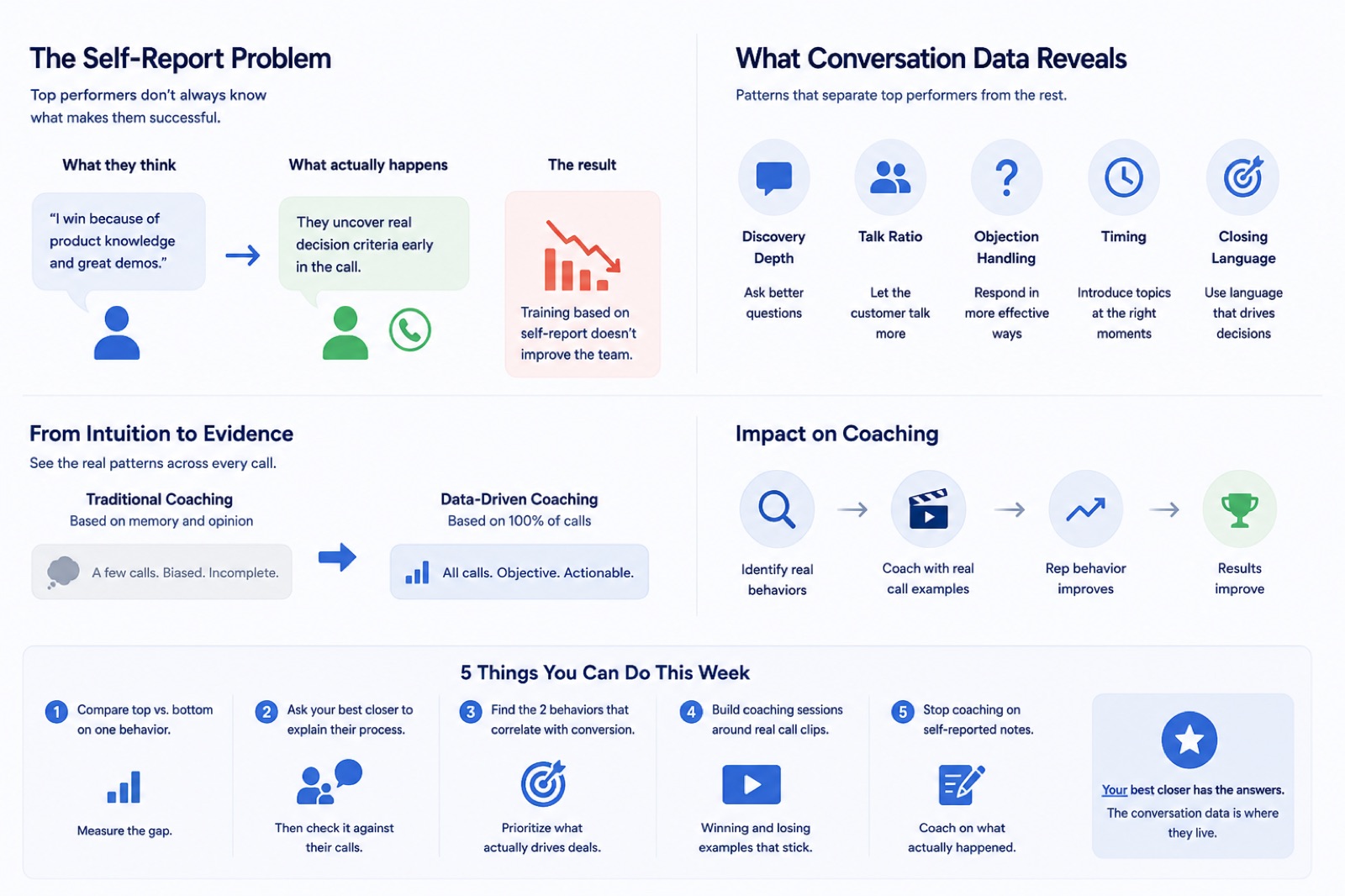
High-ticket sales coaching is the work of improving how reps sell expensive, long-cycle deals: fewer calls, bigger decisions, several buyers, and a lot of money riding on each conversation. The phrase is also used by people who sell coaching programs. This guide is for the other reader: the sales leader or contact center manager who has to make a team better at closing large deals, and needs a method that does not depend on which calls a manager happened to hear.
How to become good at high-ticket sales
In a high-ticket sale the buyer is not choosing a product on a whim. They are managing a risk, and your rep is the person who has to make that risk feel understood and small. Three habits separate reps who close these deals from reps who only demo them:
- They find the real problem before pitching. A rep who asks what happens if nothing changes learns the cost of the status quo in the buyer's own words, and that is the number the price is compared with.
- They map the decision. Large deals have a user, a budget holder and often someone who can only say no. A rep who talks to one person and calls it a pipeline is guessing.
- They leave every call with a dated next step. "I'll send something over" is not a next step. A meeting on the calendar, with an agenda both sides agreed, is.
None of these is secret knowledge. What makes them hard is that they are behaviors inside a conversation, and a rep cannot see their own habits from the inside. That is the case for coaching on real calls rather than on role-plays and slide decks.
What are the 7 steps of coaching?
There is no single official list, so here is the sequence we would run for a sales team. Each step is something a manager does, not something a rep reads.
- Define what good looks like. Write it as observable behaviors: asked about the cost of inaction, named the decision maker, confirmed the next step.
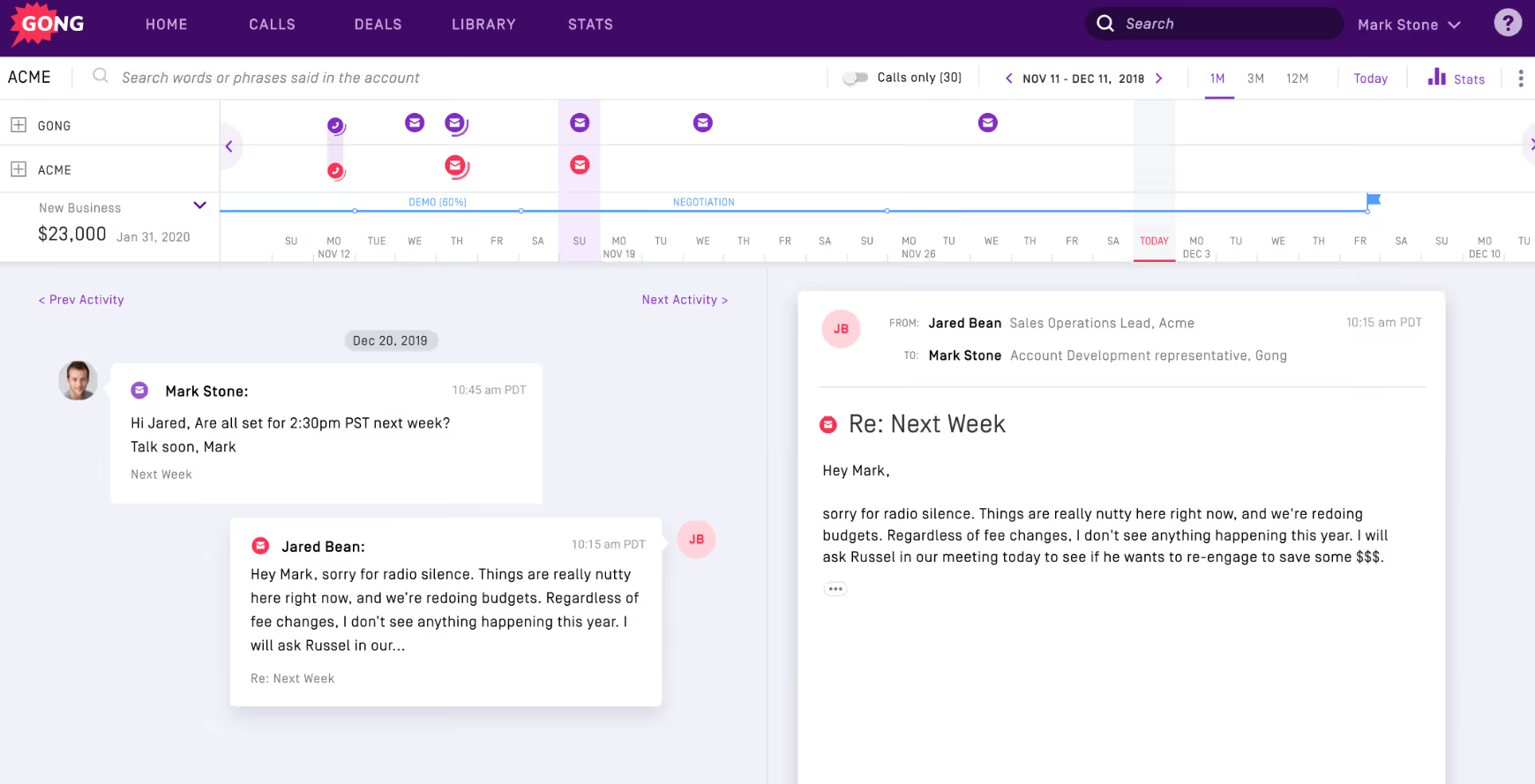
- Look at real conversations. Listen to what the rep said, not to the CRM note about it.
- Score against the same criteria for every rep. Without a shared yardstick, coaching turns into a debate about anecdotes.
- Pick one gap. A rep who is handed six things to fix fixes none of them.
- Show it. Play the moment in the call, then play or describe what a stronger version sounds like.
- Practice it. The rep rehearses the changed line before the next live call.
- Re-check on the next calls. The coaching worked only if the behavior shows up in later conversations.
Steps 2, 3 and 7 are where most teams stall, because they need someone to listen to calls. A manager with ten reps can review a handful of calls a week, so most coaching is built on whichever calls were sampled.
What are the 5 C's of sales?
The "5 C's" is a mnemonic that different trainers define differently, so treat any single list with caution. A version that works for high-ticket deals is:
- Context: why the buyer is looking now, and what changed.
- Cost: what the problem costs them today.
- Criteria: how they will decide, and who decides.
- Competition: what else they are considering, including doing nothing.
- Commitment: the specific next step each side has agreed to.
The value of a list like this is not memorizing it. It is turning it into a scorecard line per item, so you can see in a recorded call whether the rep covered it.
What is the role of a sales coach?
A sales coach does three jobs. First, they see the behavior: they hear the calls, and they hear enough of them to tell a pattern from a bad day. Second, they translate what they saw into one specific change a rep can make this week. Third, they hold the line on consistency, so every rep is measured against the same standard and a top performer's habits can be named and taught to others.
A coach is not a closer who steps into deals, and not a motivational speaker. Pep talks do not change what a rep says in minute twelve of a discovery call.
Sales training and coaching are different jobs
Training teaches a method to a group: a framework, a product pitch, a negotiation approach. Coaching applies that method to one rep's actual calls. Teams that run sales coaching programs as a one-off workshop get a spike in recall and little change in behavior, because nothing in the workflow checks whether the new habit is used on live calls. Coaching sales teams well means training sets the standard and coaching measures it, call by call.
Where AI fits in coaching sales teams
The bottleneck in coaching is listening. AI removes it: software transcribes and analyzes every sales conversation, scores it against the criteria you defined, and surfaces the calls and moments worth a manager's time. The manager spends their hours on the coaching conversation, not on finding the right call.
Ender Turing's sales use case works this way. Automated scorecards typically reach 95%+ agreement with the customer's own reviewers, and the accuracy-improvement workflow rewrites criteria definitions from those reviews, so the scorecard keeps matching how your managers judge a call. Scheduled chats in EnderGPT prepare coaching material for each rep every week, so a manager opens a prepared brief per rep instead of starting from a blank page.
What it costs
The free plan for sales and customer-success teams covers 3 users, 50 conversations a month and meetings up to 30 minutes, with no expiry. Team is $59 per user a month and Business is $89 per user a month; Enterprise is custom. Current details are on the pricing page. A team of three reps can run the full method above on its own calls before paying anything.
A starting point for this month
Pick the one deal-stage behavior that matters most in your sales cycle, such as naming the decision maker. Write it as a yes-or-no scorecard line. Score every call against it for four weeks, coach the reps who miss it, and check whether the number moves. One measured behavior, coached on real calls, beats a sales training calendar with nothing to check it against.